

Teaching Static Electricity: Hands-On Experiments for School Science
October 9, 2026
Teaching Static Electricity: Hands-On Experiments for School Science
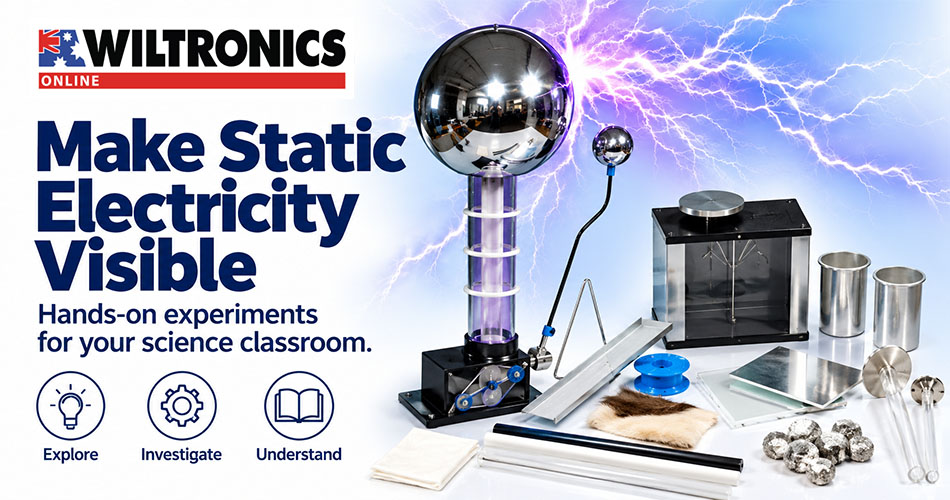
Static electricity is one of those science topics students can see, hear and sometimes even feel.
A charged rod can attract small pieces of paper. Two objects can repel one another without touching. An electroscope can make an invisible electrical charge visible. And a Van de Graaff generator can turn an abstract physics concept into one of the most memorable demonstrations in the science classroom.
But the best electrostatics lessons go beyond producing a spark.
Students should have opportunities to predict, observe, compare and explain what happens when electrical charge is generated, transferred and redistributed.
At Wiltronics, we supply electrostatics and physics equipment for Australian schools, laboratories and STEM programs. In this guide, we explore six practical ways to teach static electricity, from simple introductory investigations to more advanced classroom demonstrations.
What Is Static Electricity?
Static electricity is an imbalance of electric charge on or within a material.
Atoms contain positively charged protons and negatively charged electrons. When certain materials come into contact and are separated, electrons can transfer between their surfaces.
One material may gain electrons while another loses them.
This creates an imbalance of charge.
Students can then investigate several important ideas:
- unlike charges attract
- like charges repel
- charged objects can attract some neutral objects
- charge can be transferred between materials
- charge can move through conductive materials
- electric forces can act without objects touching
Unlike current electricity, where charge continuously moves through a circuit, static electricity generally involves charge accumulating before eventually being transferred or discharged.
1. The Classic Charged Rod Experiment
Best for:
Introducing electrostatic attraction and charging by friction.
Equipment:
- electrostatic rod
- suitable rubbing material such as fur, cotton or wool
- small pieces of lightweight paper
What to do:
Place several tiny pieces of paper on the bench.
Bring an uncharged rod close to them and observe what happens.
Next, rub the rod with an appropriate cloth and bring it close to the paper again without touching it.
Students should see the lightweight pieces move towards the charged rod.
Ask students:
- What changed after the rod was rubbed?
- Does the rod need to touch the paper?
- What evidence suggests an electrical force is acting?
- What happens as the charge gradually dissipates?
This simple experiment introduces an important idea:
electrostatic forces can act at a distance.
Students can repeat the investigation using different rod materials and rubbing materials.
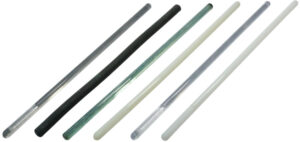
Wiltronics supplies Electrostatic Rods in nylon, acrylic, polystyrene, polyethylene, glass and ebonite, giving students an easy way to compare the electrostatic behaviour of different materials.

A dedicated Electrostatic Cloth Set with cotton and wool is also available for classroom electrostatics experiments.
2. Compare Different Materials
Once students can successfully create a static charge, the investigation can become more systematic.
Equipment:
- several different electrostatic rods
- fur, cotton, wool, silk or other suitable rubbing materials
- small pieces of paper or another simple charge indicator
Investigation:
Charge each rod using the same number of strokes and compare its apparent ability to attract lightweight objects.
Students could create a results table such as:
| Rod material | Rubbing material | Attraction observed | Relative effect |
|---|---|---|---|
| Acrylic | Cloth | ||
| Ebonite | Cloth | ||
| Glass | Cloth | ||
| Polythene | Cloth |
This turns a demonstration into an investigation.
Instead of simply showing students that static electricity exists, they can ask:
Do different combinations of materials produce the same electrostatic effect?

The Wiltronics Electrostatic Kit – LQ1802 is particularly useful for introductory activities because it combines acrylic, plastic and rubber rods with fur and silk for static-friction experiments.
Teaching opportunity
This is also a good point to discuss why experimental conditions need to remain consistent.
Students should try to control variables such as:
- number of rubbing strokes
- length of time the rod is rubbed
- area of material used
- distance between the rod and test object
- environmental conditions
The experiment may not produce perfectly quantitative results, but it provides an excellent introduction to fair testing.
3. Detect Charge With an Electroscope
Attraction of paper makes static electricity visible, but an electroscope allows students to investigate charge more systematically.
An electroscope responds when electrical charge is transferred to or induced within its conductive components.
Equipment:
- metal-vane electroscope
- electrostatic rod
- suitable rubbing material
Investigation:
Start with the electroscope discharged.
Charge an electrostatic rod and slowly bring it towards the electroscope terminal.
Students should observe the response of the vane.
Try moving the charged rod closer and further away.
Then compare the response produced by differently charged rods.
Questions to investigate:
- Does the rod need to touch the electroscope?
- How does distance affect the response?
- What happens when the rod is removed?
- What happens when charge is transferred directly?
- Can different materials produce different responses?
The IEC Metal Vane Electroscope – EM1810-001 available from Wiltronics is designed to provide a robust and sensitive method of detecting electrostatic charge in classroom investigations.
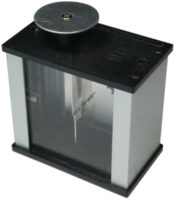
Its metal vane deflects when charge is deposited on the electrode disc, allowing students to observe and compare electrostatic effects.
Extend the experiment
Ask students to predict what will happen before every change.
Prediction → observation → explanation is a powerful structure for practical physics because it exposes the difference between what students expect and what actually happens.
4. Investigate Attraction and Repulsion With Pith Balls
A suspended lightweight object can make electrostatic forces particularly easy to observe.
Conductive pith balls can be used to demonstrate both attraction and repulsion.
Equipment:
- conductive pith balls
- insulating thread
- suitable support
- charged electrostatic rod or other suitable charge source
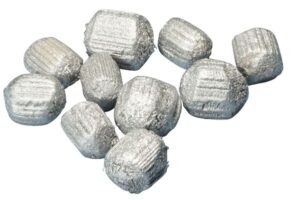
Wiltronics supplies Electrostatic Conductive Pith Balls – Pack of 10, EM1775-001 for this type of classroom investigation.
Investigation:
Suspend the pith balls so they hang close together.
Introduce a charged object and observe their movement.
Different configurations allow students to investigate what happens when charge is transferred and when both suspended objects acquire similar charges.
Key idea
This provides a visible demonstration of one of electrostatics’ most important relationships:
like charges repel and opposite charges attract.
It is also a useful transition from the familiar idea of charged objects attracting neutral materials to the more sophisticated idea of interactions between charged objects.
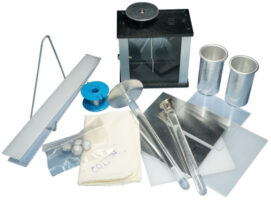
For a more comprehensive set of experiments, the IEC Electrostatics Kit Nuffield – EM1771-001 includes a metal-vane electroscope, proof plane, electrophorus, conductive pith balls, nylon filament, aluminium cans, insulating tiles, strips and other apparatus.
5. Explore Electrostatic Induction
One of the more interesting steps in teaching electrostatics is showing students that an object does not necessarily need to be touched by a charged object for its charges to redistribute.
This is electrostatic induction.
Equipment:
Depending on the demonstration, useful equipment may include:
- electrostatic rods
- electroscope
- insulated conductors
- metal containers or conductors
- proof plane or related electrostatic accessories
The IEC Electrostatics Kit Nuffield – EM1771-001 provides many of these components in a single classroom kit.
Demonstration:
Bring a charged object close to an isolated conductor without touching it.
The external charge can cause mobile charges within the conductor to redistribute.
Students can then investigate how the effect changes when:
- the charged object moves closer
- the charged object moves away
- the conductor is earthed
- charge is transferred
- multiple conductors are used
Why this matters
Induction challenges a common student assumption that electrical effects require direct contact.
It also provides an important conceptual bridge towards later study of:
- electric fields
- conductors and insulators
- charge distribution
- earthing
- electrostatic shielding
For advanced secondary classes, students can begin relating these observations to the behaviour of electrons within conductive materials.
6. Demonstrate High-Voltage Electrostatics With a Van de Graaff Generator
Few pieces of physics apparatus create the same immediate reaction from a class as a Van de Graaff generator.
A Van de Graaff generator accumulates electrostatic charge on a large conductive dome, allowing high-voltage electrostatic effects to be demonstrated clearly.
It can be used to investigate concepts including:
- charge accumulation
- electrostatic attraction and repulsion
- discharge
- electric fields
- conductors
- insulation
- earthing
Demonstrations can include:
Electrostatic discharge
Position the appropriate earthed discharge sphere near the dome and observe the spark crossing the air gap.
Lightweight materials
Suitable lightweight materials placed near or on the apparatus can visibly respond as charge accumulates.
Charge and distance
Students can observe how changing the distance between appropriately configured electrodes affects discharge behaviour.
Van de Graaff accessories
Purpose-designed accessories can extend the generator into additional demonstrations involving electrostatic forces and charge distribution.
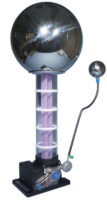
Wiltronics supplies several IEC options, including the Large Van de Graaff Generator – 300 mm Ball, EM4133-101 and the compact Small Hand-Operated Van de Graaff Generator – 180 mm Ball, EM4152-001.
The hand-operated model is particularly useful where teachers want a manually driven demonstration unit that does not require electrical power.
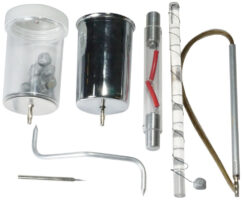
Wiltronics also stocks the IEC Van de Graaff Accessory Set – EM4144-001 for extending the range of demonstrations that can be performed.
Important Van de Graaff Safety
A Van de Graaff generator is specialised high-voltage demonstration equipment and should not be treated like the simple rod experiments earlier in this guide.
Teachers should always follow:
- the manufacturer’s operating instructions
- the school’s laboratory procedures
- appropriate supervision requirements
- applicable risk assessments
- correct earthing and discharge procedures
Keep sensitive electronic equipment away from electrostatic demonstrations where recommended by the manufacturer.
Anyone with implanted or body-worn electronic medical equipment should not participate in or approach a Van de Graaff demonstration contrary to the manufacturer’s safety instructions.
The dome should also be correctly discharged according to the equipment instructions before it is handled after operation.
A dramatic demonstration is never more important than correct operating procedure.
Why Does Static Electricity Sometimes Work Better Than Other Times?
Teachers may notice that an electrostatics demonstration works spectacularly one day and barely works the next.
Humidity can be a major factor.
Moisture on surfaces and in the surrounding air can allow accumulated charge to leak away more quickly.
Electrostatic equipment also works best when insulating surfaces are:
- clean
- dry
- free from excessive dust
- handled appropriately
If a normally reliable electrostatic experiment suddenly becomes ineffective, checking environmental conditions and ensuring the apparatus is clean and dry is a sensible first troubleshooting step.
Turning a Demonstration Into an Investigation
Static electricity is naturally entertaining, but the educational value increases when students do more than watch.
Instead of:
“Look what happens when I charge this rod.”
Try:
“Predict what will happen when I bring this charged rod towards the electroscope. What evidence would support your prediction?”
Students can investigate variables such as:
- material type
- rubbing material
- charging time
- distance
- surface condition
- humidity
- conductor versus insulator
- method of charge transfer
They can then record their observations and identify patterns.
This transforms a memorable demonstration into genuine scientific inquiry.
A Simple Static Electricity Lesson Sequence
Teachers introducing electrostatics could progressively build the topic across several activities.
Step 1 — Generate charge
Use electrostatic rods and a suitable rubbing material to demonstrate attraction of lightweight material.
Step 2 — Compare materials
Test different rod and rubbing-material combinations using the Electrostatic Kit – LQ1802 or individual rod materials.
Step 3 — Detect charge
Introduce the IEC Metal Vane Electroscope – EM1810-001.
Step 4 — Investigate forces
Use conductive pith balls to explore attraction and repulsion.
Step 5 — Introduce induction
Use the IEC Electrostatics Kit Nuffield – EM1771-001 to investigate charge transfer, induction and charge distribution.
Step 6 — Demonstrate larger effects
Use an appropriate IEC Van de Graaff generator as a teacher-controlled demonstration to bring the concepts together.
This sequence moves students from a phenomenon they can immediately observe towards progressively more sophisticated explanations.
Choosing Electrostatics Equipment for Your Science Lab
The equipment required depends on the depth of the lesson.
For introductory classes
Start with:
- Electrostatic Rods – 300 × 10 mm
- Electrostatic Cloth Set – Cotton and Wool
- Electrostatic Kit – LQ1802
These are reusable and well suited to small-group investigations.
For more structured investigations
Add:
- IEC Metal Vane Electroscope – EM1810-001
- Electrostatic Conductive Pith Balls – EM1775-001
- IEC Electrostatics Kit Nuffield – EM1771-001
These allow students to explore attraction, repulsion, charge transfer and induction in greater depth.
For whole-class demonstrations
Consider:
- Large IEC Van de Graaff Generator – 300 mm Ball
- Small Hand-Operated IEC Van de Graaff Generator – 180 mm Ball
- IEC Van de Graaff Accessory Set – EM4144-001
These can make electrostatic phenomena visible to an entire class and support more advanced physics demonstrations.
Frequently Asked Questions
What causes static electricity?
Static electricity occurs when there is an imbalance of electrical charge. Contact and separation between certain materials can transfer electrons from one surface to another, leaving the objects with different net charges.
What is the easiest static electricity experiment for students?
One of the simplest experiments is to rub an electrostatic rod with a suitable material and bring it close to small pieces of lightweight paper. The attraction provides an immediate visible indication that the rod has become electrically charged.
Why does a charged rod attract neutral paper?
A nearby charged object can cause charges within a neutral object to redistribute slightly. The side closest to the charged object can experience a stronger attractive force than the repulsive force acting on charges farther away, producing an overall attraction.
What does an electroscope do?
An electroscope detects the presence of electric charge. In the IEC Metal Vane Electroscope, electrical charge causes the sensitive metal vane to deflect, giving students a visible indication of electrostatic effects.
Why does static electricity work better in dry weather?
Moisture provides pathways that allow electrical charge to dissipate from surfaces. Under drier conditions, charge can often remain accumulated for longer, making electrostatic effects easier to observe.
What is the difference between static electricity and current electricity?
Static electricity involves an accumulation or imbalance of charge. Current electricity involves the continuous movement of electric charge through a conductive path or circuit.
What is a Van de Graaff generator used for in schools?
A Van de Graaff generator produces and accumulates electrostatic charge so that teachers can demonstrate high-voltage electrostatic effects including attraction, repulsion, charge distribution and electrical discharge.
Is a Van de Graaff generator safe for classroom use?
It is specialised high-voltage laboratory equipment and should only be operated according to the manufacturer’s instructions, school procedures, appropriate supervision and applicable risk assessments. Correct earthing and discharge procedures are essential.
What equipment does a school need to teach static electricity?
For introductory lessons, electrostatic rods and suitable rubbing materials can be sufficient. An electroscope and electrostatics kit allow more detailed investigations, while a Van de Graaff generator is useful for teacher-led whole-class demonstrations.
Where can Australian schools buy electrostatics equipment?
Wiltronics supplies electrostatic rods, kits, electroscopes, Van de Graaff generators, accessories and related physics apparatus for Australian schools, laboratories and STEM programs.
Browse Electrostatics Equipment at Wiltronics
Make Static Electricity Visible
Static electricity introduces students to electrical forces in a way that is immediate, surprising and memorable.
But the spark is only the starting point.
By allowing students to generate charge, compare materials, detect electrostatic effects, investigate attraction and repulsion and explore induction, teachers can turn an invisible physical phenomenon into something students can test for themselves.
With the right apparatus and a carefully structured sequence of experiments, electrostatics becomes an excellent platform for developing both physics understanding and practical scientific thinking.
© Electrotech Brands Pty Ltd 2026
Write a Comment
You must be logged in to post a comment.