

pH Pen Testers: Choosing Between the OHAUS ST10 and ST20
October 20, 2026
pH Pen Testers: Choosing Between the OHAUS ST10 and ST20
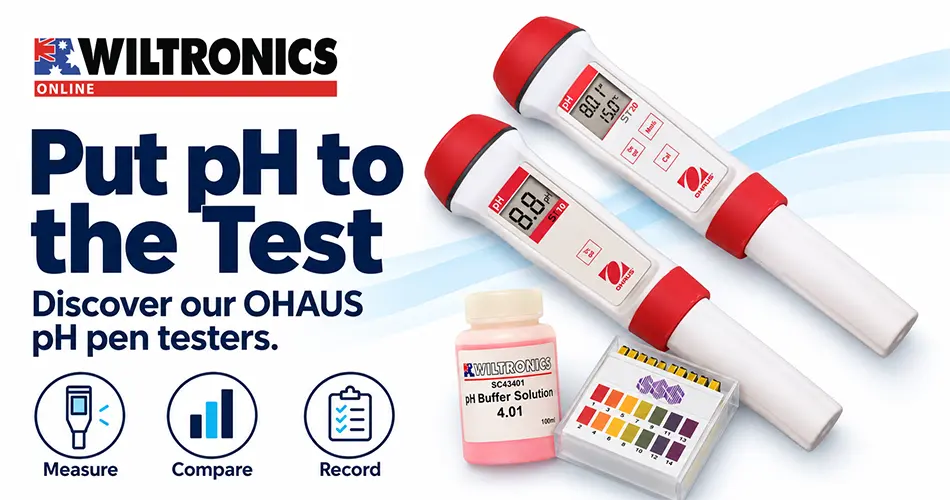
A pH pen tester puts a numerical reading in your hand, making it easier to record and compare liquid samples. Choosing the right pen starts with the measurements you need: straightforward pH checks, or finer readings supported by temperature measurement and user calibration.
At Wiltronics, our OHAUS ST10 and ST20 pH pen testers offer two distinct options. This guide compares their features, explains the supporting equipment to consider and outlines a practical way to organise repeatable testing.
Quick recommendation: Choose the ST10 for simple pH-only checks where its stated performance suits the task. Choose the ST20 when you need temperature readings, automatic temperature compensation and a user-calibration facility.
Compare our OHAUS pH pen testers
| Feature | OHAUS ST10 | OHAUS ST20 |
|---|---|---|
| pH measurement range | 0–14 pH | 0–14 pH |
| pH resolution | 0.1 pH | 0.01 pH |
| Stated pH accuracy | ±0.1 pH | ±0.05 pH |
| Temperature display | No | Yes |
| Automatic temperature compensation | No | Yes |
| Calibration | Not applicable | Three-point |
| Replaceable electrode | Yes | Yes |
| Housing protection rating | IP67 | IP67 |
OHAUS ST10: straightforward pH-only testing
Our OHAUS ST10 pH Pen provides a simple starting point when you need pH readings without temperature display or additional measurement functions.
Its one-button operation suits a straightforward testing routine. Consider it when a 0.1 pH display increment and the stated accuracy meet your requirements.
The important purchasing distinction is calibration: the ST10 listing specifies calibration as not applicable. Do not choose it expecting the ST20’s user-adjustable three-point calibration procedure. A check against a suitable reference solution can help assess performance, but checking a reading is not the same as adjusting the meter.
OHAUS ST20: pH, temperature and calibration
Our OHAUS ST20 pH & Temperature Pen adds features for a more controlled measurement routine.
Its finer pH resolution, temperature display and calibration function make it our stronger option for users who want to record sample conditions and maintain a regular calibration process. In education, it also provides opportunities to teach the difference between checking an instrument, calibrating it and measuring an unknown sample.
The listing gives a temperature measurement range of 0–99°C and stated temperature accuracy of ±0.5°C. The instrument’s ambient operating limits are separate from its sample-temperature range; consult the supplied instructions before testing hot or cold liquids.
Resolution is not the same as accuracy
Resolution is the smallest step shown on the display. Accuracy describes how closely the instrument is specified to measure under stated conditions.
For example, a display that changes in 0.01 pH steps does not establish accuracy of ±0.01 pH. Avoid treating every change in the last digit as evidence that the sample has meaningfully changed.
Before selecting a tester, write down the decision the reading will support. If you need to distinguish very small differences, compare the required uncertainty with the complete measurement method, not simply the number of decimal places.
Build a complete pH testing station
Suitable pH buffers
Our pH buffer range supports instrument checks and calibration where the meter permits it.
Choose buffers compatible with the exact model’s recognised values and procedure. Follow the supplied instructions rather than assuming every pH pen accepts the same calibration sequence.
Pour small working portions into clean, labelled containers. Do not return used buffer to the original bottle. Record the buffer identity and expiry information alongside the instrument check or calibration record.
Model-specific replacement electrodes
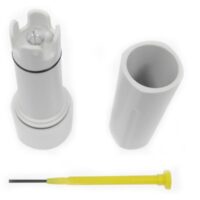
Wiltronics supplies the OHAUS Replacement Pen Electrode for ST10—ME4319 and the OHAUS Replacement Electrode for ST20—ME4321.
Match the replacement to the pen model. Including electrode maintenance in your equipment plan makes it easier to keep a testing station usable over time. Follow the replacement and preparation procedure before putting a new electrode into service.
Containers and sample-transfer accessories
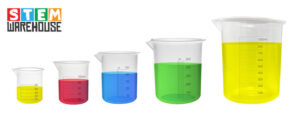
Our Low-Form Polypropylene Beakers can help organise separate samples, rinse water and buffer portions.
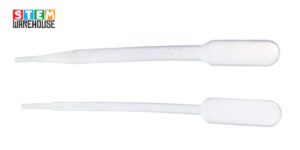
Disposable Transfer Pipettes are useful for transferring small quantities into those containers. Assign separate pipettes to different solutions to reduce carry-over.
Provide enough sample for the specified electrode immersion depth. A few drops suitable for indicator paper may not be enough for a pen tester.
A practical measurement routine
Prepare the electrode as directed before first use or after storage. The OHAUS ST20 instructions specify conditioning in electrode protection solution and maintaining storage solution in the protective cap. Follow the instructions supplied with your exact unit for preparation, cleaning and storage.
- Identify the sample. Label its container and note preparation details relevant to the comparison.
- Check instrument readiness. Inspect the electrode and battery status. For the ST20, complete the required calibration routine with suitable buffers.
- Rinse between solutions. Use the rinse water specified by the manufacturer and handle the fragile sensing element carefully.
- Immerse correctly. Follow the model’s immersion instructions and allow the reading to stabilise before recording it.
- Record the conditions. Note the pen model, pH result and temperature when available.
- Finish with electrode care. Clean and store the electrode as instructed, with the protective cap fitted.
IP67 protection does not replace the measurement instructions or permit unrestricted immersion in every liquid.
Classroom investigation: compare readings and repeatability
Use this suggested activity for an age-appropriate class after teacher review. The reviewed OHAUS ST20 manual states that the pen should not be used by children aged 12 or younger; use a teacher-operated demonstration for those groups and check the instructions supplied with your unit.
Prepare three labelled, teacher-approved aqueous samples at similar room temperature. Select samples that suit the electrode and the school’s risk assessment. Students should measure them separately rather than mixing them.
Ask students to predict the order from lowest to highest pH. Then record measurements using the procedure above. For a second reading, use a fresh portion of the same prepared sample and repeat the handling steps.
| Sample | Predicted order | First pH reading | Repeat pH reading | Temperature, if measured | Notes |
|---|---|---|---|---|---|
| A | |||||
| B | |||||
| C |
Discuss whether differences between repeat readings are large enough to matter for the task. Repeated agreement shows repeatability; it does not, by itself, prove accuracy.
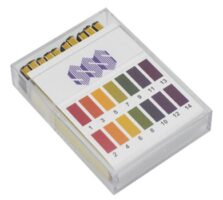
As an optional comparison, use pH indicator strips on separate sample portions. Ask students why a broad colour estimate and a numerical reading may provide different levels of detail without necessarily contradicting each other.
Troubleshooting unexpected readings
| Observation | Useful first checks |
|---|---|
| Reading takes a long time to settle | Electrode preparation, cleanliness and sample suitability |
| A reference check is outside expectations | Buffer condition, temperature, electrode condition and model-specific calibration options |
| Repeat results differ | Carry-over, inconsistent sample preparation or insufficient settling time |
| Two pens disagree slightly | Their stated accuracy, calibration status and sample conditions |
| Display is faint or the pen will not start | Batteries and the manufacturer’s maintenance instructions |
If a check fails, investigate before using subsequent readings to make a decision. Repeating an unreliable method can produce a consistent-looking set of results without resolving its underlying problem.
Frequently asked questions
Which pH pen should I choose for calibration lessons?
The ST20 is the appropriate choice between these two models because it provides user calibration. The ST10 listing does not specify a user-calibration function.
Does automatic temperature compensation make every sample read the same at different temperatures?
No. It compensates for the electrode’s temperature-dependent response; a sample’s own pH can still change with temperature. Keep comparison conditions consistent and record temperature where possible.
Can these pens be pushed directly into soil?
Do not assume so. These are liquid pH pens. Use a suitable soil-testing method or purpose-designed instrument, and confirm the electrode’s suitability before measuring prepared soil extracts.
Can a pH pen establish whether water is safe to drink?
No. A pH result alone cannot establish drinking-water safety or identify all contaminants.
Are the electrodes replaceable?
Yes. Wiltronics lists separate replacement electrodes for the ST10 and ST20. Select the part specified for your model.
Choose your pH pen tester with Wiltronics
Compare the OHAUS ST10 and OHAUS ST20, or browse our full pH tester range.
Choose around the readings you need, then plan for buffers, electrode care and sample handling. That preparation helps turn a convenient handheld instrument into a dependable part of your testing routine.
© Electrotech Brands Pty Ltd 2026
Write a Comment
You must be logged in to post a comment.