

IEC Signal Generators for Schools: Compare Models & Accessories
November 23, 2026
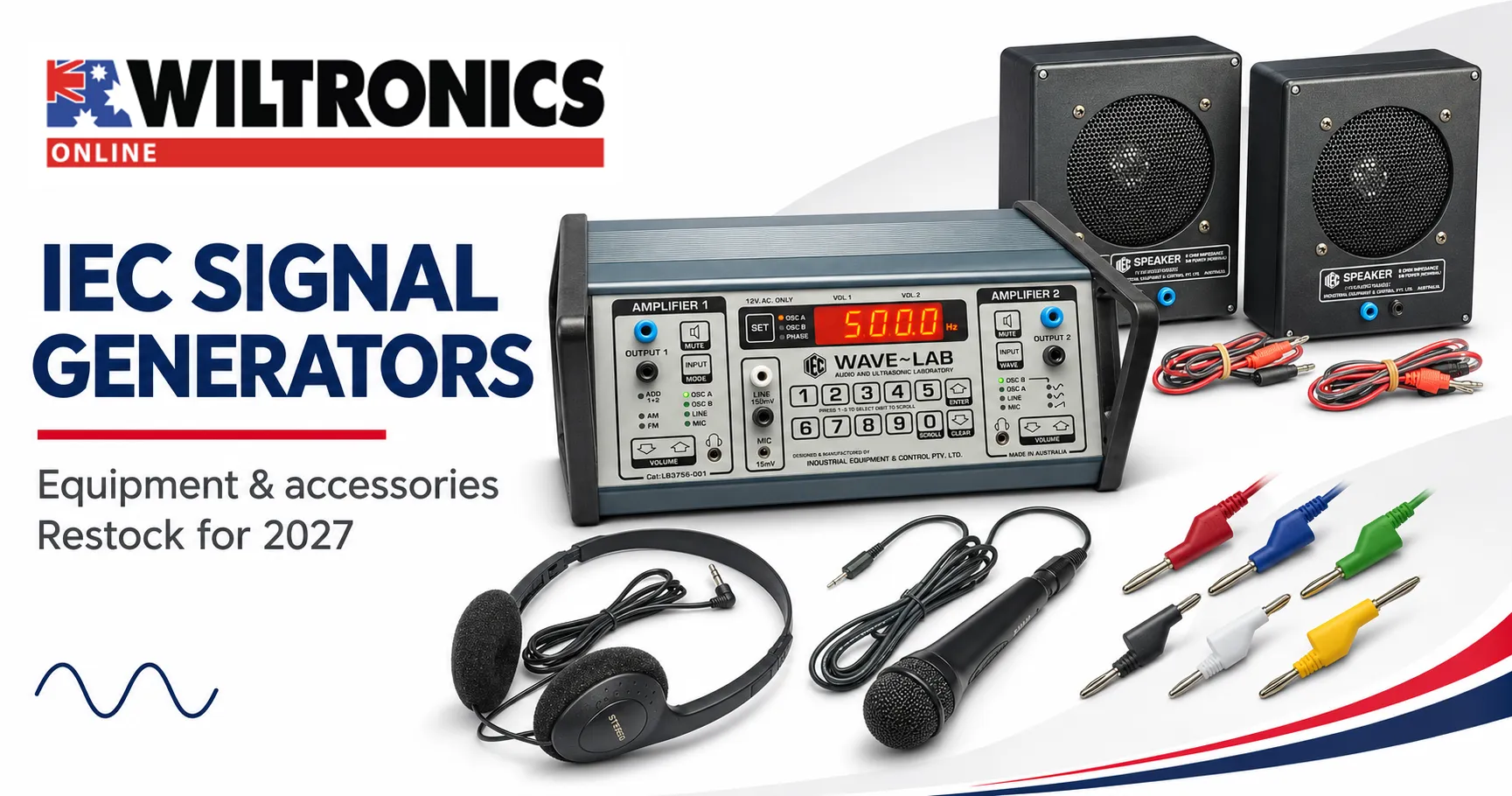
IEC Signal Generators for Schools: Compare Models & Accessories
Replacing ageing physics equipment or expanding your school’s laboratory setup? At Wiltronics, our IEC signal generator range includes Mini-Wave, General Purpose and Wave Lab models, alongside speakers, leads and replacement accessories.
With the school year drawing to a close, now is a useful time to check existing equipment, identify incomplete setups and prioritise purchases for 2027. A generator upgrade can also be an opportunity to replace worn leads and missing accessories, so the equipment is ready to use when school returns.
Compare IEC Signal Generators
Start with the output, controls and connections your laboratory requires. Frequency range is one consideration, but waveform options, output current and the ability to combine signals also distinguish these models.
| Signal generator | Key features | Purchasing consideration |
|---|---|---|
| IEC Mini-Wave Signal Generator — LB3753-101 | 0.1 Hz–100 kHz; sine, square, triangle and sawtooth waveforms; digital frequency setting; current-limited output up to 1 A | Consider for benches requiring digital frequency control and a choice of four waveforms |
| IEC General Purpose Signal Generator — LB3754-001 | 0.1 Hz–100 kHz; sine, triangular and square waveforms; attenuation controls; high-current output up to 500 mA | Consider when replacing equipment with conventional frequency, range and amplitude controls |
| IEC Wave Lab Signal Generator — LB3756-101 | Two frequencies up to 40 kHz; signal combination, phase adjustment and modulation; microphone and headphones included | Consider when the laboratory needs dual-signal functions and a broader wave-study setup |
IEC Mini-Wave Signal Generator
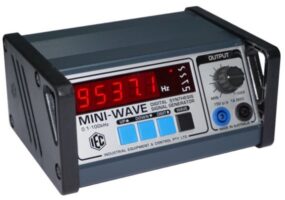
The IEC Mini-Wave Signal Generator combines a 0.1 Hz–100 kHz frequency range with sine, square, triangle and sawtooth waveforms. Its digital Quick Set controls support direct frequency adjustment, while the current-limited output provides up to 1 A.
For a year-end equipment review, the Mini-Wave is worth considering where clear frequency setting and multiple waveform options are priorities. Check the electrical requirements of any equipment you intend to connect before selecting the generator and accessories.
IEC General Purpose Signal Generator
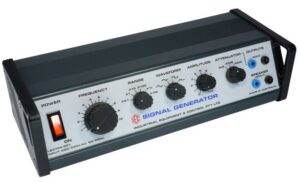
The IEC General Purpose Signal Generator provides sine, triangular and square waveforms across a 0.1 Hz–100 kHz range. Controls cover frequency, range, waveform, amplitude and decibel attenuation.
It includes a 600-ohm output and a high-current output of up to 500 mA, with short-circuit protection. This model is an option for schools replacing conventional bench generators or maintaining a familiar control layout across multiple workstations.
When comparing it with existing equipment, check the output connection and load requirements as well as the frequency range.
IEC Wave Lab Signal Generator
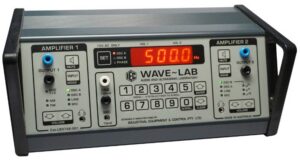
The IEC Wave Lab Signal Generator produces two frequencies up to 40 kHz and provides functions for combining, phase-shifting and modulating signals. It also includes keyboard frequency entry and an external signal input.
A microphone and headphones are included, while the loudspeaker is purchased separately. This distinction matters when preparing an order: a new Wave Lab unit already includes two of the accessories that may need replacing on an older unit.
For schools expanding their equipment capability, its dual-signal functions provide a clear reason to consider the Wave Lab alongside the Mini-Wave and General Purpose models.
Speakers, Leads and Replacement Accessories
A working generator can still be unavailable for use if its leads or accessories are missing. Include these items in the same stocktake as the main equipment.
| Product | Role in your equipment restock |
|---|---|
| IEC 4-Ohm Loudspeaker for Wave Study | Separate loudspeaker for a Wave Lab setup |
| IEC Wave Lab Headphones with Cable and Plug | Replacement for missing or damaged Wave Lab headphones |
| IEC Wave Lab Microphone with Lead and Plug | Replacement microphone for an existing Wave Lab unit |
| Hirschmann 4 mm Banana Plug Test Leads | 250 mm stackable leads for compatible connections |
| 4 mm Stackable Banana Plug Test Leads | Additional connection leads, with options to suit different bench arrangements |
IEC Loudspeaker for Wave Study
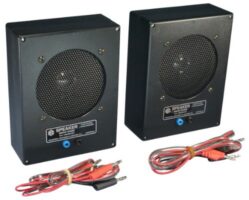
The IEC 4-ohm loudspeaker features a 150 mm twin-cone speaker, a protective metal grille and two 4 mm connection sockets. It is rated at 5 W RMS and is intended for use with the Wave Lab.
Include the speaker when building a complete new setup, or check the condition of an existing speaker before ordering another generator. Confirm suitable output settings and connection requirements before use.
Replacement Wave Lab Headphones
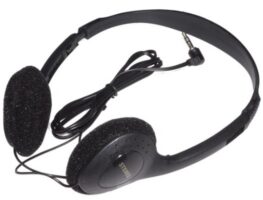
The IEC Wave Lab headphones are supplied with a cable and plug. They provide a replacement option when the headphones from an existing set are missing or damaged.
Check each stored Wave Lab set individually. Replacing an accessory may be all that is needed to return an otherwise working unit to service.
Replacement Wave Lab Microphone
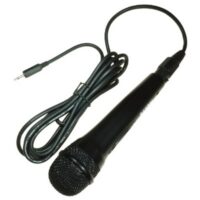
The IEC Wave Lab microphone includes its lead and plug. It is a useful addition to a replenishment order where an existing set is incomplete.
For new purchases, remember that the Wave Lab already includes a microphone. Order additional units according to your replacement or spare-equipment needs.
Banana Plug Test Leads
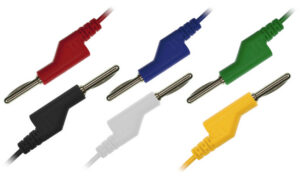
Our Hirschmann 4 mm banana plug test leads provide a short, 250 mm connection option with stackable plugs. Our 4 mm stackable banana plug test lead range provides further options for completing bench connections.
Choose leads according to socket compatibility, length and electrical ratings. During the stocktake, set aside leads with damaged insulation, loose plugs or unreliable connections.
Prioritise Complete Setups for 2027
Count the number of complete, working setups your school needs at the same time. This gives a more useful purchasing target than counting generators alone.
For each existing unit, record:
- The model and whether it operates correctly.
- The condition of its controls, sockets and cables.
- Which speakers, microphones or headphones belong with it.
- The number and type of suitable connection leads available.
- Whether replacement accessories or a new generator are required.
Prioritise faulty main equipment first, then complete usable sets with the accessories they need. Where additional capability is required, compare the generator’s functions against that specific requirement.
Frequently Asked Questions
Which IEC signal generator should our school choose?
Choose according to the functions and output requirements of your existing equipment. The Mini-Wave offers digital frequency setting and four waveforms. The General Purpose model provides conventional controls and attenuation options. The Wave Lab adds dual-frequency functions, including signal combination, phase adjustment and modulation.
Is a higher maximum frequency always better?
No. Waveform selection, output current, control layout and compatibility with connected equipment also matter. A generator should be selected for the complete setup it will support.
Does the IEC Wave Lab include a speaker?
The Wave Lab includes a microphone and headphones. The IEC loudspeaker for wave study is available separately.
Can we replace missing Wave Lab accessories?
Yes. Replacement headphones and a replacement microphone are available individually.
Will any banana plug lead suit our equipment?
Check the connector size, socket design and electrical rating before ordering. Lead length also matters when arranging equipment across a laboratory bench.
Complete Your Physics Equipment Restock
Explore our Mini-Wave, General Purpose and Wave Lab
© Electrotech Brands Pty Ltd 2026
Write a Comment
You must be logged in to post a comment.