

CCTV Security Camera Buying Guide Australia
August 27, 2026
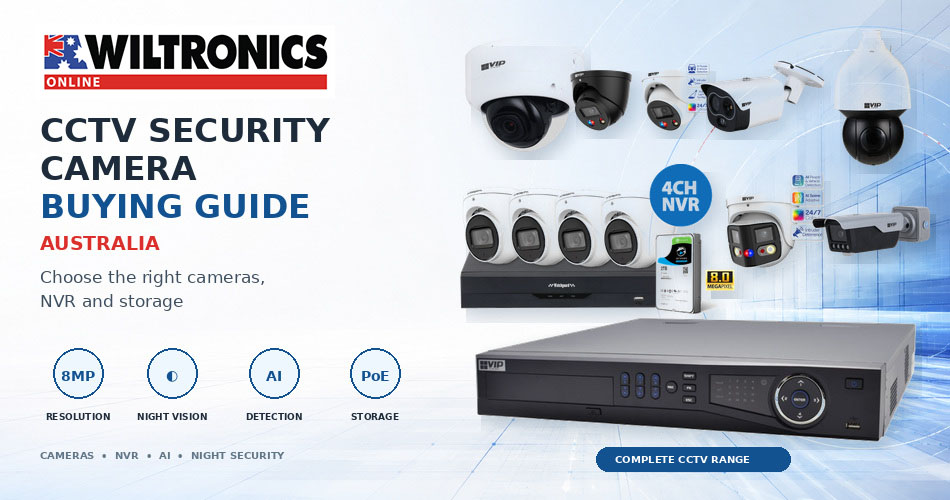
CCTV Security Camera Buying Guide Australia
That is why choosing CCTV should begin with the site and the evidence you need—not with the largest megapixel number on the box. A wide overview of a car park, a recognisable face at an entrance and a readable number plate are three different tasks. They may require different lenses, mounting positions, lighting and camera types.
This guide explains how to plan an IP surveillance system for a home, shop, office, warehouse, school or larger commercial property. It covers camera resolution, lens selection, night performance, AI detection, Power over Ethernet, NVR capacity and storage, then connects each requirement to suitable products in the Wiltronics security-camera range.
Quick recommendation: For many homes and small businesses, a 4- or 8-channel PoE NVR with 6MP or 8MP turret cameras is a strong starting point. Add motorised-lens, active-deterrence, PTZ, thermal or ANPR cameras only where the location and security objective justify them.
Best Wiltronics CCTV options at a glance
| Requirement | Recommended option | Why it fits |
|---|---|---|
| Complete four-camera system | Watchguard 4-channel 6MP AI kit | PoE recorder, 2TB drive and four weather-resistant AI turret cameras in one package |
| Expandable small-business recorder | Professional AI 8CH PoE NVR | Eight channels, two drive bays and broad AI support |
| Wide general-purpose 4K view | Professional AI 8MP fixed turret | Wide 107-degree view, infrared, microphone and edge recording |
| Adjustable exterior view | Professional AI 8MP motorised bullet | Motorised framing with person and vehicle classification |
| Proactive warning | Professional AI 8MP active-deterrence turret | Spotlight, strobes and programmable siren |
| Vehicle entry | Traffic AI 4MP ANPR bullet | Purpose-built number-plate capture |
| Large-area live monitoring | Professional AI 8MP 25x PTZ dome | 25x optical zoom, 360-degree pan and auto-tracking |
| Specialist perimeter and heat detection | Hybrid Thermal 4MP bullet | Visible and thermal imaging with heat-event functions |
Start with a site plan
Before comparing cameras, walk through the property and mark what must be protected. Separate each location into one of four viewing objectives:
- Detection: establish that a person or vehicle entered an area.
- Observation: understand what is happening within the scene.
- Recognition: obtain enough detail to recognise a known person or vehicle.
- Identification: capture sufficiently clear evidence to distinguish an unknown subject.
A camera that gives an excellent overview may not provide identification detail at the far end of the scene. Conversely, a narrow view aimed at a gate may identify entrants but leave surrounding activity unseen. Good systems use a combination of overview and detail cameras.
For every proposed camera, record:
- the target area and viewing objective
- approximate distance to the subject
- required field of view
- day and night lighting conditions
- indoor or outdoor exposure
- mounting height and access
- cable route and distance to the recorder
- possible backlighting, glare, trees or moving traffic
This simple plan prevents the most common CCTV mistake: buying a set of identical cameras and expecting each one to solve a different problem.
4MP, 6MP or 8MP: how much resolution do you need?
Higher resolution can preserve more detail, but it also increases bandwidth and storage requirements. Image quality depends on the complete imaging system: sensor, lens, field of view, lighting, compression, shutter settings and mounting position all matter.
| Resolution | Typical role | Main advantage | Planning consideration |
| 4MP | General monitoring and controlled entrances | Strong detail with moderate storage use | Choose the lens and viewing distance carefully |
| 6MP | Homes, shops, offices and mixed commercial sites | Useful balance of detail, cost and storage | A practical middle ground for multi-camera systems |
| 8MP / 4K | Entrances, yards and locations where extra digital detail is valuable | More pixels for review and cropping | Requires more storage and network bandwidth |
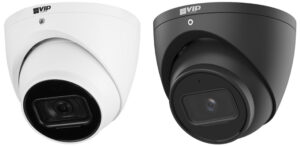
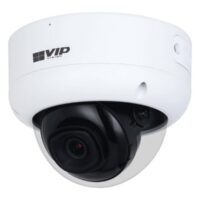
The Professional AI Series 8.0MP Fixed Turret Camera records up to 3840 × 2160 at 25fps. Its 2.8mm fixed lens provides a wide 107-degree view, while H.265 encoding helps manage storage. It also includes infrared illumination, a microphone and a microSD slot.
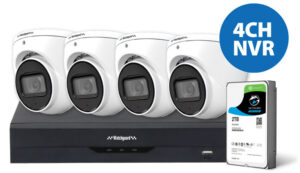
For a complete small-site solution, the Watchguard LA Series 4 Channel 6.0MP AI Surveillance Kit includes a PoE NVR, pre-installed 2TB drive and four weather-resistant 6MP turret cameras. Camera cabling is sold separately.
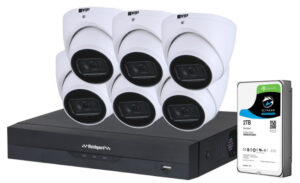
Ready to compare complete systems? Start with the Watchguard security-camera range or build a customised system from compatible VIP Vision cameras and NVRs.
Resolution does not replace correct framing
An 8MP camera covering an excessively wide area can still produce a small, indistinct subject. Before upgrading resolution, ask whether a different lens angle, closer mounting position or second camera would create better evidence.
Fixed lens or motorised lens?
A fixed-lens camera has one set field of view. A common 2.8mm lens provides a wide scene, making it useful for rooms, entrances, verandas and general perimeter coverage.
A motorised vari-focal camera lets the installer adjust the viewing angle remotely during setup. It is valuable when the exact framing cannot be confirmed until the camera is mounted, or when a narrower view is needed to concentrate pixels on a gate, loading area or corridor.
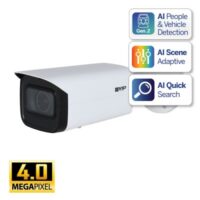
The Professional AI Series 4.0MP Motorised Bullet Camera combines adjustable framing with person and vehicle identification. Paired with a compatible VIP Vision NVR, relevant events can be isolated during playback.
Choose a fixed lens when the scene is predictable and wide coverage is appropriate. Choose a motorised lens when precise commissioning, longer observation distances or adjustable framing are more important.
Turret, bullet or dome camera?
The housing affects mounting, adjustment, appearance and resistance to interference more than basic image resolution.
Turret cameras
Turret cameras are compact, easy to aim and commonly used beneath eaves and on walls or ceilings. Their separated lens and infrared arrangement can also help reduce internal infrared reflection.
Best for: homes, offices, schools, retail interiors, entrances and general-purpose indoor/outdoor coverage.
The 8.0MP fixed turret camera is a strong general-purpose option where wide 4K coverage, audio and edge-storage capability are useful.
Bullet cameras
Bullet cameras have a visible, directional body. Their shape clearly indicates where the camera is aimed and can provide a deterrent presence.
Best for: perimeters, driveways, warehouses, loading areas, yards and longer exterior views.
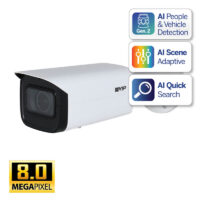
For adjustable 4K coverage, the Professional AI Series 8.0MP Motorised Bullet Camera combines motorised framing with person and vehicle classification.
Dome and vandal-resistant cameras
Dome cameras offer a discreet appearance and can be more difficult for an observer to read at a glance. Vandal-resistant housings are useful in accessible or public-facing areas where equipment may be knocked or tampered with.
Best for: shops, corridors, public spaces, reception areas and lower mounting positions.
PTZ cameras
Pan-tilt-zoom cameras can move and optically zoom across large spaces. They are useful for live monitoring, presets, patrol routes and investigation across wide sites—but a PTZ only records the direction it is facing at that moment. Fixed cameras should normally maintain continuous coverage of critical points.
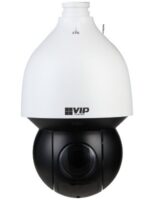
The Professional AI Series 8.0MP 25x Zoom PTZ Dome is suited to larger commercial sites where 25x optical zoom, auto-tracking and rapid 360-degree panning support active monitoring.
Night vision and difficult lighting
Many security incidents occur in low light, so night performance should be treated as a core requirement rather than an optional feature.
Infrared illumination
Infrared cameras can record monochrome images in darkness. Check the rated infrared distance, but remember that real performance also depends on the surface, scene width, weather and mounting. A nearby wall, fascia or spider web can reflect infrared light and degrade the image.
Low-light colour and white light
Colour can preserve useful information such as clothing or vehicle colour. Low-light colour models need some ambient light, while active-deterrence cameras can activate white illumination in response to an event.
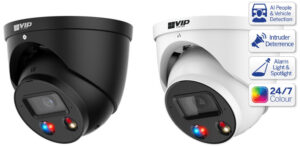
The Professional AI Series 8.0MP Fixed Deterrence Turret can activate a spotlight, flashing light and siren, switch from infrared to colour during alarm events and classify people and vehicles.
Wide dynamic range
Entrances often place a subject against bright daylight. True wide dynamic range helps balance bright and dark areas so that the foreground does not become a silhouette. Prioritise WDR for doorways, loading bays, car-park exits and other high-contrast scenes.
AI detection: fewer alerts and faster searching
Basic motion detection can react to rain, insects, shadows, foliage and changing light. AI-enabled systems can classify people and vehicles, helping reduce irrelevant notifications and speed up footage review.
Useful analytics may include:
- person and vehicle detection
- tripwire and intrusion rules
- face detection or recognition on compatible systems
- active deterrence triggers
- people counting
- number-plate recognition
- thermal perimeter or heat-event detection
Analytics depend on camera, recorder, firmware and configuration compatibility. A camera may record normally yet lose advanced analytics when paired with an incompatible recorder. Before combining ranges, confirm the supported camera series, AI feature, per-channel limits and whether analysis occurs in the camera or NVR.
Choose analytics by outcome: browse the VIP Vision range for compatible person/vehicle detection, deterrence, ANPR, people-counting and thermal options.
Active deterrence
Active-deterrence cameras react to a classified event with visible or audible warnings. They are useful at gates, side access, yards and restricted areas where intervention is more valuable than recording alone.
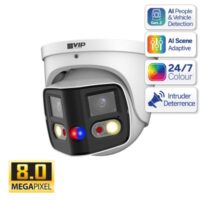
The Professional Series AI 8MP Active Deterrence Turret combines person and vehicle detection with a white spotlight, blue/red strobes and programmable siren tones.
Number-plate recognition
ANPR is a specialised task. A general overview camera may show a vehicle but fail to capture a readable plate because of angle, distance, motion or headlight glare.
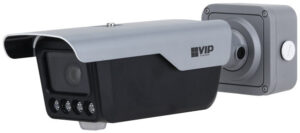
The Traffic AI Series 4.0MP Motorised AI ANPR Bullet is designed for plate identification in challenging lighting. It should be positioned and configured specifically for the expected lane, direction, speed and capture distance.
Thermal surveillance
Thermal cameras detect heat patterns rather than relying only on visible light. They can help with perimeter detection in difficult visual conditions and provide specialised heat or fire-event functions.
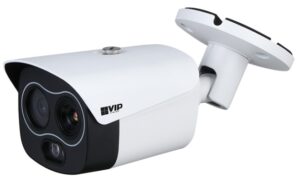
The Hybrid Thermal Series 4.0MP Fixed Bullet combines a visible-light camera with a 256 × 192 thermal sensor, Image Fusion, thermal perimeter rules and heat/fire detection capability.
Why PoE is the practical choice for IP CCTV
Power over Ethernet carries network data and electrical power over one compatible Ethernet cable. This simplifies installation and lets a PoE NVR or switch power cameras centrally.
PoE offers several advantages:
- one cable to each camera
- centralised power and recording
- easier backup when the NVR and PoE equipment are connected to a UPS
- straightforward expansion within the recorder and switch limits
- reliable wired connectivity compared with dependence on Wi-Fi
Cable type, distance, route, weather exposure, PoE standard and total power budget still matter. Engage appropriately qualified installers for fixed cabling and electrical work, and follow applicable Australian requirements.
Choosing the right NVR
The network video recorder is the centre of an IP CCTV system. It receives and stores camera streams, provides local display and playback, manages user access and may run additional analytics.
Three figures are commonly confused:
- Camera channels are the maximum number of cameras the NVR can record.
- Built-in PoE ports are the number of cameras it can power and connect directly. A recorder may support more channels than it has PoE ports.
- PoE power budget is the total wattage available across those ports. High-power PTZ, heater or specialist cameras may require more power than standard fixed cameras.
An NVR advertised as 16-channel with eight PoE ports can record up to 16 compatible streams, but additional cameras may require a separate compatible PoE switch and network design. Always check total bandwidth and power as well as socket count.
Compare these specifications:
- channel count: number of cameras the NVR can record
- built-in PoE ports: number of cameras it can power directly
- incoming bandwidth: total camera data the recorder can accept
- maximum recording resolution: supported camera stream resolution
- decoding capacity: how many streams can be displayed simultaneously
- drive bays and maximum disk size: storage and retention potential
- AI support: compatible analytics and per-channel limits
- display outputs: monitor resolution and number of outputs
- remote access and alerts: supported apps and management options
Small systems: up to eight cameras
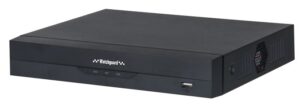
The Compact AI Series 8CH PoE NVR offers eight channels, built-in PoE and a single drive bay. It is a practical choice for smaller sites introducing AI person/vehicle detection.
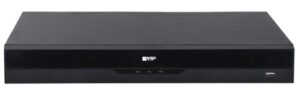
The Professional AI Series 8CH PoE NVR with two HDD bays provides more storage flexibility, records cameras up to 16MP and includes a broader suite of AI functions.
Medium systems: up to 16 cameras
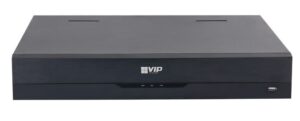
The Professional AI Series 16CH PoE NVR supports up to 16 cameras, four drive bays and high recording bandwidth. It is suited to larger homes, retail, offices, schools and commercial sites that need more retention or analytics capacity.
Larger commercial systems
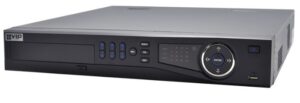
The Professional AI Series 32CH PoE NVR supports up to four storage drives, 16 built-in PoE ports and extensive AI capabilities. For still larger deployments, Wiltronics also carries 64-channel and 128-channel NVR options.
Allow spare channels when practical. An eight-channel recorder with eight cameras leaves no room for a later gate, shed or loading-area camera.
Select the recorder before ordering storage: compare 8-, 16-, 32-, 64- and 128-channel NVR options by channels, PoE ports, bandwidth, drive bays and supported analytics.
How much CCTV storage do you need?
Storage depends on more than camera count. The major variables are:
- resolution
- frame rate
- bitrate and compression
- number of cameras
- continuous or event-based recording
- hours of activity per day
- required retention period
- audio recording
- scene complexity
A useful planning formula is:
Storage = total camera bitrate × recording time
As a planning example, one camera averaging 4 Mb/s produces about 43GB per day before allowing for variation and overhead.
| Example system | Approximate daily storage | Approximate 14-day storage | Approximate 30-day storage |
| Four cameras averaging 4 Mb/s each | 173GB | 2.4TB | 5.2TB |
| Eight cameras averaging 4 Mb/s each | 346GB | 4.8TB | 10.4TB |
These figures assume continuous recording at the stated average bitrate and are deliberately rounded. Event recording may use less space; higher bitrates, frame rates, audio or busy scenes may use more. Recorder formatting and operational reserve also reduce usable capacity.
Do not size storage using resolution alone. Use the manufacturer’s calculator or bitrate recommendations, choose surveillance-rated drives and allow a margin. If footage must be kept for a defined period, verify retention after commissioning.
Recommended systems by application
| Application | Suggested starting point | Product example |
| Home or small office | Four-camera 6MP PoE kit with 2TB storage | Watchguard 4-channel 6MP AI kit |
| Small business with expansion | 8-channel PoE NVR plus 6MP or 8MP turret cameras | Professional 8CH PoE NVR |
| Retail entrance or reception | Wide 8MP turret with WDR and audio | 8MP fixed turret camera |
| Driveway, gate or loading area | Motorised bullet for controlled framing | 8MP motorised bullet camera |
| Restricted side access | AI turret with spotlight and siren | 8MP active-deterrence turret |
| Vehicle entry | Dedicated ANPR camera | 4MP AI ANPR bullet |
| Large commercial site | 16- or 32-channel NVR with fixed overview and PTZ cameras | 32CH Professional AI PoE NVR |
| Specialised perimeter or heat detection | Hybrid visible/thermal camera | Hybrid thermal bullet |
Common CCTV buying mistakes
Buying resolution instead of usable evidence
More megapixels cannot compensate for poor lighting, excessive distance or the wrong field of view. Define the target and expected detail first.
Mounting cameras too high
A very high camera may capture the top of a person’s head rather than a useful face. Balance protection against tampering with the angle required for identification.
Ignoring night conditions
Review each scene after dark. Check for infrared reflection, glare, vehicle headlights, dark corners and motion blur.
Filling every NVR channel immediately
Leave expansion capacity where future cameras are likely. Also confirm PoE-port count, power budget, bandwidth and storage—not only channel count.
Treating all motion alerts as equal
Person and vehicle classification can reduce nuisance alerts, but analytics must be configured for the scene. Define useful zones and rules rather than enabling every notification.
Forgetting the wider system
Allow for surveillance hard drives, network switches, a monitor, mounts, junction boxes, weather-resistant connections, data cabling and backup power. The recently published Wiltronics UPS Buying Guide explains how to protect the recorder and network equipment from short power interruptions.
CCTV installation checklist
Before ordering, confirm:
- every camera has a defined viewing objective
- lens angle and mounting distance suit the target
- resolution and night performance are appropriate
- outdoor cameras and connections suit the environment
- NVR channels, PoE ports and bandwidth cover the design
- storage supports the required retention period
- AI functions are compatible across camera and recorder
- cable routes and lengths are practical
- user permissions, passwords and remote access will be managed securely
- signage, audio recording, privacy and surveillance practices comply with applicable requirements
- installation and fixed cabling are completed by appropriately qualified people where required
Frequently asked questions
Is 4MP or 8MP better for security cameras?
8MP provides more pixels, which can preserve extra detail and allow closer review. However, 4MP can be sufficient for many controlled scenes and uses less bandwidth and storage. Lens, distance, lighting and framing are just as important as resolution.
What is the difference between a turret, bullet and dome camera?
A turret is compact and easy to aim, a bullet provides a visible directional deterrent and often suits perimeter views, while a dome offers a discreet appearance and may provide greater resistance to interference when supplied in a vandal-resistant housing.
What is a PoE security camera?
A PoE camera receives data and compatible DC power through one Ethernet cable. It can connect to a PoE NVR or network switch, simplifying cabling and centralising power.
How many NVR channels should I buy?
Choose enough channels for the initial design plus realistic expansion. A four-camera site may benefit from an eight-channel NVR if more entrances or exterior areas are likely to be added.
How long does CCTV footage last?
Retention depends on drive capacity, camera count, bitrate, resolution, frame rate, compression and recording mode. Calculate storage using expected bitrates and then verify real retention after commissioning.
Does AI eliminate false alarms?
AI person and vehicle classification can substantially reduce irrelevant motion events, but it does not eliminate every false alert. Good camera placement, suitable detection zones and correct sensitivity settings remain important.
Do I still need fixed cameras if I install a PTZ?
Usually, yes. A PTZ can monitor and zoom across a large area, but it only records the direction it faces. Fixed cameras preserve continuous coverage of entrances and other critical points.
Final recommendation
The best CCTV system is designed around evidence, not specification headlines.
Begin with a site plan, decide where detection, recognition or identification is required, then select the camera resolution, lens and housing for each view. Use AI where it solves a real alert or search problem, and size the NVR for camera count, bandwidth, storage and future expansion.
For many homes and small businesses, the Watchguard 4-camera 6MP AI kit provides a convenient complete-system starting point. Sites needing customised coverage can build around the Professional AI 8-channel PoE NVR and combine fixed, motorised, deterrence or specialist cameras by location.
Explore VIP Vision security cameras, NVRs and accessories at Wiltronics.
© Electrotech Brands Pty Ltd 2026
Write a Comment
You must be logged in to post a comment.