

Water Quality Meters: Choosing the Right pH, Conductivity & TDS Meter
May 28, 2026
Water Quality Meters: Choosing the Right pH, Conductivity & TDS Meter
Water quality testing plays a critical role across science classrooms, laboratories, hydroponics systems, aquaculture, environmental monitoring, and industrial applications. Whether you are checking drinking water quality, monitoring nutrient solutions, or conducting STEM experiments, selecting the right water quality meter improves both accuracy and reliability.
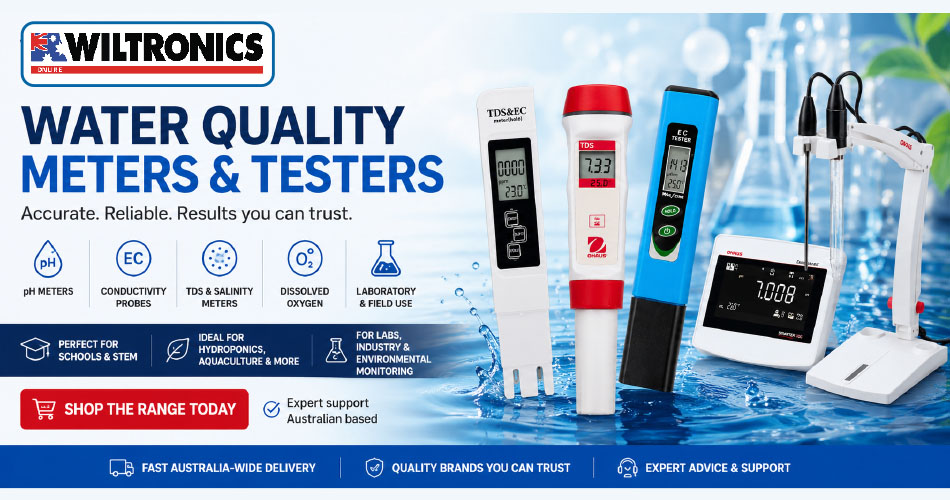
Wiltronics offers a broad range of water testing instruments including pH meters, conductivity probes, TDS meters, dissolved oxygen meters, salinity meters, and multiparameter systems designed for educational, laboratory, and field use.
What Is a Water Quality Meter?
A water quality meter is an electronic instrument used to measure specific chemical or physical properties of water. Different meters are designed to analyse different parameters including:
| Parameter | What It Measures | Common Applications |
|---|---|---|
| pH | Acidity or alkalinity | Laboratories, hydroponics, aquariums |
| Conductivity (EC) | Electrical conductivity from dissolved salts | Hydroponics, water treatment |
| TDS | Total dissolved solids | Drinking water, filtration systems |
| Dissolved Oxygen (DO) | Oxygen concentration in water | Aquaculture, environmental science |
| Salinity | Salt concentration | Marine testing, aquaculture |
| ORP | Oxidation reduction potential | Water treatment |
These measurements help determine water suitability for scientific, agricultural, educational, and industrial purposes.
For educational and laboratory testing systems, explore:
Understanding pH Meters
A pH meter measures the acidity or alkalinity of a solution on a scale typically ranging from 0 to 14.
- pH below 7 = acidic
- pH 7 = neutral
- pH above 7 = alkaline
Accurate pH measurement is essential in:
- Chemistry laboratories
- Aquaculture
- Hydroponics
- Soil analysis
- Water treatment
- STEM classroom experiments
Learn more about laboratory pH systems here:
Benchtop vs Portable pH Meters
| Type | Best For | Advantages |
|---|---|---|
| Benchtop pH Meters | Laboratories & classrooms | Higher precision, data logging |
| Handheld pH Meters | Field testing | Portable and easy to transport |
| Pen Testers | Quick checks | Affordable and beginner-friendly |
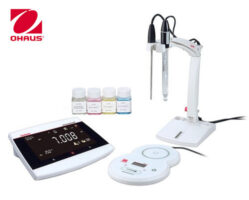
For advanced laboratory applications, research-grade systems like the Aquasearcher AB41PH-F pH Benchtop Meter offer highly accurate pH measurements with temperature compensation and professional calibration features.
You can also browse additional pH meters and testers here:
What Is a Conductivity Meter?
Conductivity meters measure how well water conducts electricity. Since dissolved salts and minerals carry electrical charge, conductivity provides an indication of ion concentration in water.
Conductivity testing is widely used for:
- Hydroponics nutrient monitoring
- Aquaculture
- Environmental water testing
- Industrial process monitoring
- Educational science experiments
Conductivity Probes for STEM & Field Testing
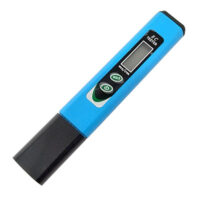
Portable conductivity probes are ideal for classroom demonstrations and field science activities because they are compact, waterproof, and easy to operate.
The EC mS/cm Conductivity Probe is designed for measuring salt concentration and conductivity in water using a simple pen-style design.
Browse more conductivity probes and testers here:
- Hydroponics nutrient balancing
- Aquaculture salinity testing
- Environmental science fieldwork
- School STEM investigations
- Laboratory chemistry analysis
What Is a TDS Meter?
A TDS (Total Dissolved Solids) meter estimates the amount of dissolved ions in water by measuring conductivity.
TDS readings are commonly displayed in:
- ppm (parts per million)
- mg/L (milligrams per litre)
TDS meters are frequently used for:
- Drinking water testing
- Water filtration monitoring
- Hydroponics
- Aquarium maintenance
- Pool and spa testing
Learn more about TDS meters and how they work here:
Popular TDS Meter Options
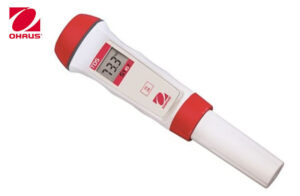
The Ohaus ST10T-B TDS Meter Tester offers reliable portable TDS measurement with replaceable electrodes and IP67 protection.
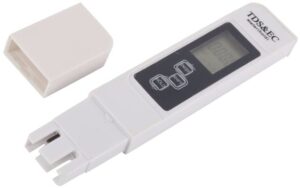
For multipurpose testing, the 3 in 1 Water Quality Tester combines TDS, conductivity, and temperature measurement in a compact handheld design suitable for classrooms, hydroponics, and water filter testing.
Choosing the Right Water Quality Meter
For Schools & STEM Education
Look for:
- Easy-to-read displays
- Portable handheld designs
- Durable construction
- Automatic temperature compensation
- Beginner-friendly calibration
Recommended options:
- Pen-style pH testers
- Portable conductivity probes
- Simple TDS testers
- Multiparameter water quality meters for STEM projects
Useful for:
- Environmental science experiments
- Water sampling excursions
- Agricultural science practicals
- Aquaponics and hydroponics projects
- Chemistry laboratory activities
For Laboratories
Prioritise:
- High accuracy
- Multi-point calibration
- Data logging
- Replaceable probes
- GLP-compatible features
Recommended options:
- Benchtop pH meters
- Multiparameter systems
- Advanced conductivity meters
Recommended laboratory product:
For Hydroponics & Aquaculture
Key considerations:
- Conductivity range
- Salinity measurement
- Waterproof construction
- Continuous monitoring capability
Multiparameter meters can simplify monitoring by combining pH, EC, TDS, and temperature readings in a single device.
Why Calibration Matters
Calibration ensures measurement accuracy over time. Most professional water quality meters require regular calibration using standard buffer or calibration solutions.
Common calibration solutions include:
- pH 4.00 buffer
- pH 7.00 buffer
- pH 10.00 buffer
- Conductivity calibration standards
Regular calibration is especially important in:
- Scientific laboratories
- Environmental monitoring
- Industrial testing
- Educational experiments requiring repeatable results
Water Quality Testing in Australian STEM Education
Water quality testing aligns strongly with:
- Environmental science
- Chemistry
- Biology
- Agricultural science
- Sustainability studies
Classroom applications include:
- River and creek testing
- Soil and irrigation studies
- Aquaponics projects
- Hydroponic nutrient monitoring
- Drinking water investigations
Portable water quality meters allow students to conduct real-world scientific investigations while developing practical data collection skills.
FAQ
What does a pH meter measure?
A pH meter measures the acidity or alkalinity of a liquid by detecting hydrogen ion activity.
What is the difference between TDS and conductivity?
Conductivity measures electrical conductance caused by dissolved ions, while TDS estimates the total amount of dissolved solids based on conductivity readings.
Are water quality meters suitable for schools?
Yes. Many portable pH meters, conductivity testers, and TDS meters are specifically suited to STEM education and classroom science experiments.
Why is temperature compensation important?
Temperature affects conductivity and pH readings. Automatic temperature compensation improves accuracy when measuring water samples at different temperatures.
How often should a pH meter be calibrated?
Calibration frequency depends on usage. Laboratory meters may require daily calibration, while occasional educational use may only require periodic checks.
People Also Ask
What is the best water quality meter for hydroponics?
A multiparameter meter that measures pH, conductivity, and TDS is often ideal for hydroponics systems.
Can TDS meters detect bacteria?
No. TDS meters only measure dissolved ionic solids and cannot directly detect bacteria or pathogens.
What is a good pH level for drinking water?
Most drinking water falls within a pH range of approximately 6.5 to 8.5.
Are conductivity meters waterproof?
Many portable conductivity probes include waterproof or water-resistant designs suitable for field testing.
© Electrotech Brands Pty Ltd 2026
Write a Comment
You must be logged in to post a comment.