

School Science Lab Restocking Checklist for a New Term | Wiltronics
June 12, 2026
School Science Lab Restocking Checklist for a New Term | Wiltronics
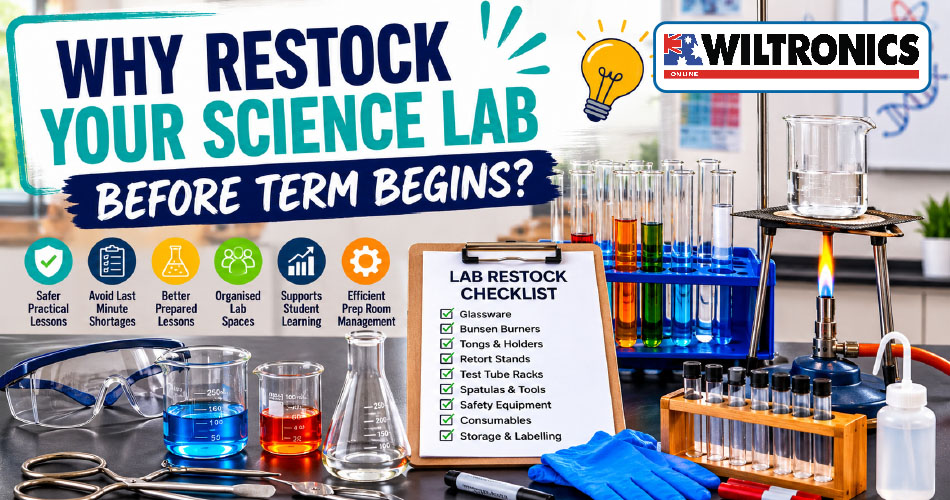
A new term is the ideal time to run through a school science lab restocking checklist and make sure your lab, prep room and classroom workstations are ready for practical lessons.
Missing glassware, damaged test tube racks, worn tongs or incomplete Bunsen burner setups can quickly slow down a class. A simple pre-term check helps teachers and lab technicians replace damaged items, top up consumables and keep practical science lessons running smoothly.
Wiltronics stocks a wide range of Lab Hardware & Consumables for schools, universities, STEM programs and general laboratory environments. From Chemistry Glassware & Plasticware to Bunsen Burners, Tripods & Equipment, Retort Stands, Rings, Clamps & Holders and Science Laboratory Safety Equipment, this checklist is a practical starting point for term-start preparation.
Practical science lessons also support the Australian Curriculum: Science, where students develop inquiry skills through questioning, planning investigations, collecting evidence, analysing data and drawing conclusions. Keeping core lab equipment organised and available helps schools prepare hands-on activities that support these learning goals.
Why Restock Your Science Lab Before Term Begins?
Science practicals are much easier to manage when equipment is checked before classes begin. A quick lab audit can help identify broken glassware, missing accessories, worn consumables and equipment that needs replacing before the first experiment is scheduled.
Restocking early helps schools:
- Reduce last-minute equipment shortages
- Prepare practical lessons with less disruption
- Keep student workstations organised
- Replace damaged or incomplete lab supplies
- Support safer handling of hot or fragile apparatus
- Improve prep room efficiency
- Support chemistry, biology, physics and STEM activities
- Align practical resources with planned science units and investigations
Small items are often the easiest to overlook. Spatulas, stoppers, test tube brushes, tongs, gauze mats, labels and grease pencils may not seem urgent until a class is waiting to use them.
Quick Term-Start Lab Restocking Checklist
| Lab area | Check these items |
|---|---|
| Measuring and mixing | Beakers, flasks, measuring cylinders, pipettes, droppers and test tubes |
| Heating activities | Bunsen burners, tripods, wire gauze mats, bench mats and pipe clay triangles |
| Handling hot items | Beaker tongs, crucible tongs and test tube holders |
| Apparatus support | Retort stands, bossheads, clamps, rings, and funnel holders |
| Titration work | Burettes, pipettes, conical flasks, funnels, burette clamps and wash bottles |
| Solid transfer | Spatulas and spoons, scoops, funnels and weighing accessories |
| Test tube work | Test tube racks, holders and cleaning brushes |
| Labelling and storage | Glass scribers and grease pencils, labels, bottles, jars, trays |
| Safety | Safety glasses, gloves, lab coats, aprons, bench mats |

1. Check Core Chemistry Glassware and Plasticware
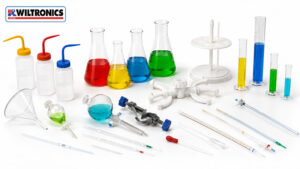
Chemistry Glassware & Plasticware are some of the most frequently used items in a school science lab. Students rely on them for measuring, mixing, heating, observing reactions, holding samples and transferring liquids between stations.
Before the new term begins, check your stock of:
- Beakers
- Measuring cylinders
- Conical flasks
- Volumetric flasks
- Test tubes
- Pipettes
- Droppers
- Bottles, vials, jugs and jars
- Funnels
Look for chips, cracks, cloudy markings, missing pieces and unclear graduations. Damaged glassware should be removed from student use, especially if it will be used for heating or chemical activities.
Glassware is useful for visibility, heating and chemical compatibility. Plasticware is often useful for storage, fieldwork, general classroom activities and situations where reducing breakage risk is important.
2. Inspect Bunsen Burners and Heating Equipment
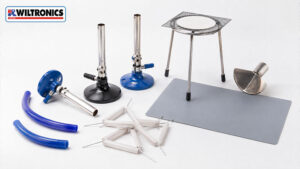
Heating activities need complete and reliable setups. A Bunsen Burner is only one part of the station. Schools also need suitable supports, protective mats and handling tools.
Check each heating station for:
- Bunsen burners
- Tripods for Bunsen burners
- Wire gauze mats
- Ceramic centre wire gauze mats
- Bench mats
- Pipe clay triangles
- Silicone or rubber tubing where required
- Heat-resistant glassware
- Beaker Tongs 250mm
- Crucible tongs
- Test tube holders
- Suitable science laboratory safety equipment
Inspect burners for visible damage, blocked parts, unstable bases and missing accessories. Tripods should sit evenly, and gauze mats should be replaced if they are badly worn, bent or damaged.
For practical lessons involving heat, make sure students also have access to appropriate holders, tongs, safety glasses and teacher-approved procedures.
3. Restock Tongs, Holders and Handling Tools
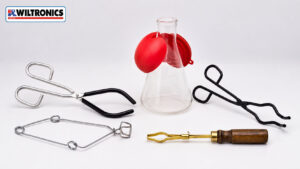
Tongs and holders help students handle hot, fragile or awkward apparatus without direct contact. They are especially important during heating experiments, demonstrations and chemical practicals.
Useful items to check include:
- Beaker tongs
- Crucible tongs
- Metal test tube holders
- Wooden test tube holders
- Heat-safe gripping tools
Replace tongs or holders if they are bent, loose, badly worn or difficult to grip. It is better to identify these problems during a prep room audit than during a live classroom practical.
4. Review Retort Stands, Clamps, Rings and Holders
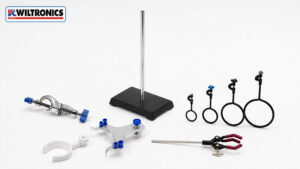
Many experiments need apparatus to stay stable and securely positioned. Retort Stands, Rings, Clamps & Holders are essential for heating, filtration, titration, demonstrations and general lab support.
Check your stock of:
- Retort stands
- Retort stand with bosshead and clamp
- Bosshead clamps
- Retort clamps
- Retort rings
- Burette clamps
- Funnel holders
Check that stands are stable, rods are secure and clamps tighten properly. A lab may have enough retort stands in storage, but not enough bossheads or clamps to make them useful for group work.
5. Prepare Titration and Measurement Equipment
Titration activities require stable, accurate and organised setups. Before a chemistry unit begins, check that all parts are clean, complete and ready for use.
Useful items include:
- Burettes
- Burette Accessories
- Single burette clamps
- Double burette clamps
- Retort stands
- Bossheads
- Conical flasks
- Pipettes
- Measuring cylinders
- Funnels
- Wash bottles
Pipettes, measuring cylinders and flasks should be clean, clearly marked and available in suitable quantities for student groups. It is also worth checking whether cleaning brushes, storage containers and labelling tools are ready for setup and pack-down.
6. Top Up Spatulas, Spoons and Transfer Tools
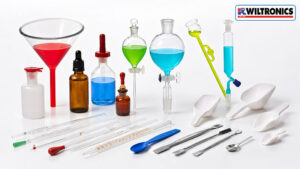
Spatulas and Spoons are small items, but they are used constantly in chemistry lessons and prep rooms. They help students transfer powders, crystals, granules and small quantities of solid material.
Check supplies of:
- Stainless steel spatulas
- Stainless steel spoon and shovel spatulas
- Plastic spatulas
- Laboratory spoons
- Scoops
- Funnels
- Droppers
- Pipettes
Because transfer tools are often used across several practical stations, schools should keep extra stock available. Running short can slow down the entire class.
7. Check Test Tube Racks, Brushes and Accessories
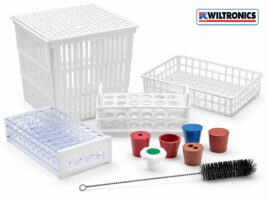
Test tubes are used across many school science activities, but the accessories around them are just as important. Test Tube Racks, Holders & Cleaning Brushes help keep experiments organised and make clean-up easier.
Before term starts, check:
- Test tube racks
- Polypropylene test tube racks
- Test tube baskets
- Test tube holders
- Small test tube brushes
- Medium test tube brushes
- Large test tube brushes
- Rubber stoppers and gooches
- Storage trays and cleaning accessories
Replace damaged racks if they no longer hold test tubes securely. Brushes should also be checked for wear, especially if they are used regularly in the prep room.
8. Restock Labelling, Storage and Small Consumables
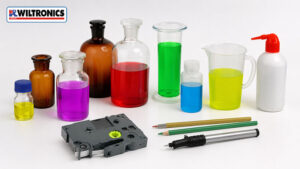
Small consumables often disappear quickly during a busy term. These items support sample identification, storage, preparation and clean-up.
Useful supplies include:
- Glass scribers and grease pencils
- Labels
- Rubber stoppers
- Bottles and jars
- Sample containers
- Tubing
- Cleaning brushes
Labelling tools are especially useful when students or technicians need to identify samples, mark glassware or organise temporary storage.
Clear containers, trays and labelled storage areas can also make the prep room easier to manage when practical lessons are scheduled close together.
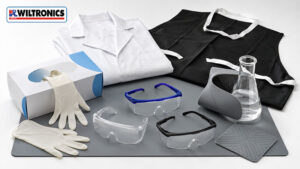
9. Review Science Laboratory Safety Equipment
Safety equipment should be checked before every practical teaching period. Schools should confirm that protective equipment is clean, accessible and available in suitable quantities.
Curriculum planning should also consider risk identification, safe equipment use and appropriate supervision when students complete practical activities in classroom, field or laboratory contexts.
Check supplies of:
- Safety glasses
- Junior science safety glasses
- Adjustable arm safety glasses
- Lab coats
- Laboratory rubberised aprons
- Gloves
- Bench mats
- Heat-safe handling tools
Safety needs vary depending on the experiment, year level, chemicals, heating method and school procedures. Teachers and laboratory technicians should always follow relevant school safety guidelines and risk assessment processes.
10. Organise Equipment by Practical Activity
Instead of checking stock only by product type, it can help to group equipment by common classroom task.
Measuring and mixing liquids:
Beakers, measuring cylinders, flasks, test tubes, pipettes and droppers.
Heating experiments:
Bunsen burners, tripods, wire gauze mats, bench mats, tongs and suitable glassware.
Handling hot items:
Beaker tongs, crucible tongs, test tube holders and heat-safe accessories.
Supporting apparatus:
Retort stands, clamps, rings, bossheads, burette holders and flask supports.
Transferring solids:
Spatulas, spoons, scoops and funnels.
Test tube work:
Test tubes, racks, holders, stoppers and cleaning brushes.
Labelling and storage:
Glass scribers, grease pencils, bottles, jars, trays and containers.
For broader lesson planning, teachers can also refer to the Australian Curriculum F–10 Curriculum and Science learning area downloads for curriculum content, scope and sequence materials, glossary resources and supporting documents.
Recommended Wiltronics Categories for Term-Start Restocking
| Lab task | Recommended category |
|---|---|
| Measuring and mixing liquids | Chemistry Glassware & Plasticware |
| General lab consumables | Lab Hardware & Consumables |
| Flame-based experiments | Bunsen Burners, Tripods & Equipment |
| Holding hot apparatus | Beaker Tongs and Crucible Tongs |
| Apparatus support | Retort Stands, Rings, Clamps & Holders |
| Titration setups | Burette Accessories |
| Transferring solids | Spatulas and Spoons |
| Test tube organisation | Test Tube Racks, Holders & Cleaning Brushes |
| Labelling samples | Glass Scriber & Grease Pencils |
| Student practical safety | Science Laboratory Safety Equipment |
Prepare Your School Science Lab with Wiltronics
A well-stocked science lab gives teachers and students the equipment they need for practical, hands-on learning. By checking glassware, heating equipment, tongs, retort stands, spatulas, racks, storage items and safety supplies before term begins, schools can reduce disruption and keep practical lessons running smoothly.
Explore the Wiltronics Lab Hardware & Consumables range to restock essential science lab supplies for your classroom, prep room or school laboratory.
FAQ
What should schools check before a new science term?
Schools should check commonly used lab supplies such as beakers, measuring cylinders, flasks, test tubes, Bunsen burners, tripods, wire gauze mats, tongs, retort stands, clamps, spatulas, racks, stoppers, labelling tools and safety equipment.
Why is a science lab restocking checklist useful?
A restocking checklist helps schools identify missing, damaged or worn equipment before practical lessons begin. This reduces last-minute shortages and helps teachers prepare experiments more efficiently.
What equipment is needed for Bunsen burner lessons?
Common equipment includes a Bunsen burner, tripod, wire gauze mat, bench mat, suitable glassware, tongs, test tube holders and appropriate safety equipment.
How often should school lab glassware be checked?
School lab glassware should be checked before each new term, before major practical units and whenever equipment returns from heavy classroom use. Cracked, chipped or damaged glassware should be removed from student use.
What are common lab consumables schools run out of?
Common lab consumables include stoppers, labels, grease pencils, pipettes, droppers, spatulas, test tube brushes, tubing, sample containers and small storage accessories.
How does lab restocking support the Australian Curriculum: Science?
A well-stocked science lab helps teachers prepare practical activities that support the Australian Curriculum: Science, including planning investigations, using equipment safely, collecting data, analysing evidence and communicating findings.
Where can schools buy lab hardware and consumables?
Schools can browse Wiltronics Lab Hardware & Consumables
© Electrotech Brands Pty Ltd 2026
Write a Comment
You must be logged in to post a comment.