

OHAUS Precision Balances Australia | Complete Buying Guide | Wiltronics
June 29, 2026
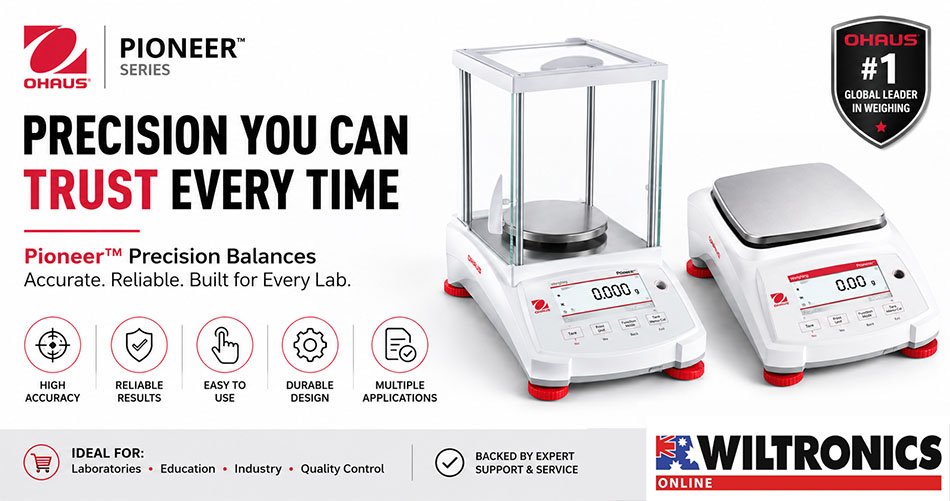
OHAUS Precision Balances Australia | Complete Buying Guide | Wiltronics
Whether you’re weighing chemical reagents in a secondary school laboratory, preparing pharmaceutical formulations, conducting university research or performing quality control in a manufacturing facility, accurate mass measurement is fundamental to producing reliable and repeatable results.
Selecting the right precision balance, however, involves much more than choosing a maximum weighing capacity. Readability, repeatability, calibration systems, weighing applications, connectivity and long-term reliability all influence how effectively a balance will perform within your laboratory.
For laboratory managers, educators, researchers and purchasing officers, investing in the right weighing equipment improves efficiency, reduces measurement errors and ensures confidence in every result.
OHAUS has earned a worldwide reputation for manufacturing laboratory balances that combine exceptional accuracy, robust construction and intuitive operation. From secondary school science laboratories through to pharmaceutical production, food testing, mining, environmental monitoring and advanced scientific research, OHAUS precision balances continue to be trusted wherever dependable weighing is essential.
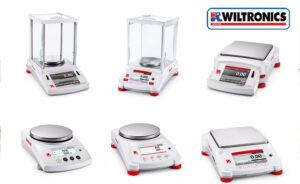
At Wiltronics, we proudly supply one of Australia’s most comprehensive ranges of OHAUS Precision Balances, including the PR Series, Pioneer Series, Adventurer Series and premium Explorer Series. Whether you’re equipping a new laboratory, replacing ageing equipment or expanding a research facility, this guide will help you compare the available ranges and confidently select the most appropriate precision balance for your application.
At a Glance
| Ideal For | Schools, Universities, Research Laboratories, Industry, Quality Assurance |
|---|---|
| Applications | Scientific Research, Chemistry, Pharmaceutical, Food Production, Manufacturing, Mining |
| Popular OHAUS Series | PR • Pioneer • Adventurer • Explorer |
| Typical Capacities | 220 g to 6200 g |
| Key Features | Internal Calibration, GLP/GMP, USB Connectivity, Multiple Weighing Modes |
In This Guide
- Why Choose an OHAUS Precision Balance?
- What Is a Precision Balance?
- Why Accurate Weighing Matters
- Understanding Precision Balance Specifications
- Choosing the Right Level of Precision
- Comparing the OHAUS PR, Pioneer, Adventurer and Explorer Series
- Selecting the Correct Capacity
- Calibration and Maintenance
- Frequently Asked Questions
Why Choose OHAUS Precision Balances?
For more than a century, OHAUS has been recognised as one of the world’s leading manufacturers of laboratory weighing equipment. Their precision balances are trusted by scientists, educators, laboratory technicians and quality assurance professionals because they consistently deliver accurate, repeatable and dependable results.
OHAUS balances are designed to support a broad range of laboratory environments, from secondary school science classrooms through to pharmaceutical production facilities and advanced research laboratories.
Key advantages include:
- Excellent weighing accuracy
- Outstanding repeatability
- Durable laboratory construction
- User-friendly operation
- Fast stabilisation times
- Internal and external calibration options
- Multiple weighing applications
- USB and RS232 connectivity
- GLP/GMP compliant reporting on selected models
- A wide range of capacities and readabilities
Because OHAUS manufactures several balance families, laboratories can select equipment that precisely matches their technical requirements and budget rather than paying for unnecessary features.
What Is a Precision Balance?
A precision balance is a laboratory weighing instrument designed to measure mass with significantly greater accuracy than standard digital scales.
Unlike general-purpose weighing equipment, precision balances are engineered to minimise environmental influences such as vibration, air movement and temperature fluctuations while delivering highly repeatable measurements.
Depending on the model selected, precision balances may display measurements to:
- 0.1 g
- 0.01 g
- 0.001 g
- 0.0001 g
This level of accuracy makes them essential throughout education, research, manufacturing and scientific laboratories.
Typical applications include:
- Preparing laboratory samples
- Chemical formulation
- Pharmaceutical preparation
- Food quality assurance
- Environmental analysis
- University research
- Industrial quality control
- Mining laboratories
- Educational science
- Engineering laboratories
Unlike household scales, precision balances are designed for continuous laboratory operation where measurement consistency is essential.
Why Accurate Weighing Matters
Every scientific measurement begins with confidence in the data.
Even small weighing errors can affect experimental outcomes, manufacturing quality, research accuracy and regulatory compliance. Selecting a balance that consistently produces reliable measurements helps laboratories maintain confidence in every stage of their workflow.
Scientific Accuracy
Accurate weighing contributes directly to:
- Repeatable experiments
- Reliable laboratory data
- Improved research confidence
- Better educational outcomes
- Consistent analytical results
For schools and universities, dependable weighing allows students to develop correct laboratory techniques while producing reliable scientific investigations.
For research laboratories, accurate measurements provide confidence that experimental data can be reproduced and validated.
Operational Efficiency
Reliable weighing equipment also improves laboratory productivity by helping organisations:
- Reduce measurement errors
- Minimise product waste
- Improve workflow efficiency
- Reduce repeat testing
- Maintain product consistency
- Support quality assurance programs
Whether preparing chemical solutions or verifying production samples, dependable weighing equipment contributes directly to laboratory efficiency.
Common Laboratory Applications
Precision balances are widely used throughout:
- Secondary schools
- TAFE laboratories
- Universities
- Research institutions
- Pharmaceutical laboratories
- Food manufacturing
- Environmental science
- Mining laboratories
- Agriculture
- Industrial quality control
Did You Know?
Even gentle air movement from an air-conditioning vent can influence highly sensitive laboratory measurements. Positioning a precision balance on a stable, vibration-free bench significantly improves measurement consistency.
Understanding Precision Balance Specifications
Understanding a few key specifications makes comparing laboratory balances much easier.
Rather than focusing only on weighing capacity, laboratories should evaluate the complete performance of the instrument.
| Specification | Why It Matters |
|---|---|
| Capacity | Maximum sample weight the balance can measure. |
| Readability | Smallest measurement increment displayed. |
| Repeatability | Ability to produce identical results repeatedly. |
| Linearity | Accuracy maintained across the complete weighing range. |
| Calibration | Ensures long-term measurement accuracy. |
| Connectivity | Allows data transfer to computers and laboratory systems. |
Capacity
Capacity refers to the maximum weight a balance can safely measure.
Typical laboratory capacities include:
- 220 g
- 420 g
- 620 g
- 1200 g
- 2200 g
- 4200 g
- 6200 g
Selecting a balance with adequate capacity provides greater flexibility while reducing the likelihood of accidental overload.
Readability
Readability describes the smallest increment displayed by the balance.
For example:
- 0.1 g
- 0.01 g
- 0.001 g
- 0.0001 g
Smaller readability values indicate increasingly precise measurements.
Repeatability
Repeatability measures how consistently a balance produces identical readings when weighing the same object multiple times.
High repeatability is essential for pharmaceutical laboratories, research facilities and quality assurance environments where reproducible results are critical.
Linearity
Linearity describes how accurately a balance performs across its entire weighing range rather than only at a single calibration point.
Excellent linearity ensures reliable measurements regardless of sample size.
Calibration
Calibration maintains measurement accuracy over time.
Depending on the OHAUS model selected, balances may offer:
- External calibration
- Internal calibration
- Automatic internal calibration
Routine calibration helps maintain confidence in laboratory measurements while supporting quality assurance programs.
Connectivity
Modern laboratory balances frequently include:
- USB
- RS232
- Ethernet (selected models)
- GLP/GMP reporting
- Data logging
- Laboratory information system compatibility
These features improve workflow efficiency while simplifying record keeping.
Choosing the Right Level of Precision
Not every laboratory requires the same level of weighing accuracy.
Selecting the appropriate balance depends on the type of work being performed.
| Application | Recommended Precision |
|---|---|
| Secondary School Science | 0.01 g |
| General Laboratory Work | 0.001 g |
| University Teaching | 0.001 g |
| Food Quality Assurance | 0.001 g |
| Pharmaceutical Applications | 0.001 g or finer |
| Scientific Research | Application dependent |
Choosing the correct balance is about finding the right combination of capacity, readability, workflow and budget.
With these specifications in mind, the next step is comparing the four major OHAUS precision balance families. In Part 2, we’ll examine the PR, Pioneer, Adventurer and Explorer Series to help you determine which range best suits your laboratory, research facility or educational institution.
Comparing the OHAUS Precision Balance Range
One of the greatest advantages of choosing OHAUS is the breadth of precision balance options available. Rather than offering a single balance designed to suit every application, OHAUS has developed several specialised product families that cater to different laboratories, industries and budgets.
A secondary school science laboratory performing routine practical experiments has very different weighing requirements to a pharmaceutical research facility, food manufacturing laboratory or industrial quality assurance department. By offering multiple balance series, OHAUS enables organisations to select equipment that delivers the functionality they need without paying for features they may never use.
Every OHAUS precision balance is engineered to provide dependable weighing performance, but each series offers a different combination of readability, calibration options, connectivity, weighing applications and workflow features.
The following overview provides a useful starting point.
| OHAUS Series | Best For | Key Strength |
|---|---|---|
| PR Series | Schools, routine laboratories | Simple, reliable and cost-effective |
| Pioneer Series | Teaching laboratories, QA | Enhanced performance and versatility |
| Adventurer Series | Professional laboratories | Advanced features and workflow efficiency |
| Explorer Series | Research and industry | Premium performance and intelligent automation |
Understanding the strengths of each range makes selecting the right laboratory balance much easier.
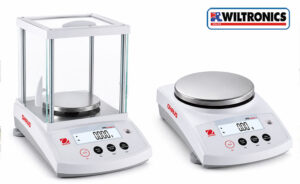
OHAUS PR Series Precision Balances
The OHAUS PR Series Precision Balances are designed for laboratories that require dependable weighing performance without unnecessary complexity.
Offering an excellent combination of affordability, reliability and ease of use, the PR Series is an outstanding choice for educational laboratories, routine quality control and general scientific weighing. Their intuitive operation allows new users to become productive quickly while still delivering the accuracy expected from a professional laboratory instrument.
For organisations purchasing their first laboratory balance or replacing ageing equipment, the PR Series represents exceptional long-term value.
Ideal For
- Secondary school laboratories
- TAFE laboratories
- University teaching laboratories
- Routine laboratory weighing
- Manufacturing quality control
- Industrial testing
Popular Features
- Reliable laboratory accuracy
- Bright backlit display
- Fast stabilisation
- External calibration
- Multiple weighing units
- Durable construction
- Simple operation
- Excellent value for money
Typical Applications
- Preparing chemistry practicals
- Routine chemical weighing
- Measuring production samples
- Ingredient verification
- Educational laboratory investigations
- General scientific weighing
Recommended if: You require dependable laboratory weighing for routine applications while maintaining an economical equipment budget.
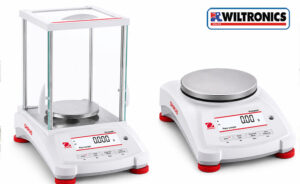
OHAUS Pioneer Precision Balances
The OHAUS Pioneer Precision Balances provide the next step in laboratory weighing by introducing additional functionality, improved repeatability and enhanced workflow features.
Designed for organisations requiring greater capability than entry-level balances, the Pioneer Series is widely used throughout universities, food laboratories, quality assurance departments and research facilities.
It offers an excellent balance between affordability and professional laboratory performance.
Ideal For
- University laboratories
- Food laboratories
- Chemical laboratories
- Environmental testing
- Quality assurance
- Industrial laboratories
Popular Features
- High weighing precision
- Excellent repeatability
- Large illuminated display
- USB communication
- Multiple weighing modes
- Fast response times
- External calibration
- Rugged laboratory construction
Typical Applications
- Chemistry practical classes
- Food quality testing
- Chemical sample preparation
- Environmental analysis
- Laboratory quality assurance
- Manufacturing verification
Classroom Example
Many university teaching laboratories use Pioneer balances to introduce students to professional laboratory weighing procedures before progressing to advanced research instrumentation.
Recommended if: Your laboratory requires greater flexibility, enhanced documentation or more advanced laboratory workflows than an entry-level balance provides.
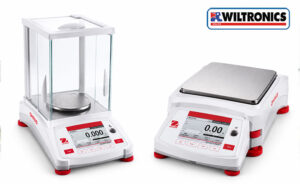
OHAUS Adventurer Precision Balances
The OHAUS Adventurer Precision Balances are engineered for laboratories that demand productivity, flexibility and advanced weighing functionality.
Combining sophisticated weighing applications with an intuitive colour touchscreen interface, Adventurer balances streamline routine laboratory procedures while maintaining exceptional measurement accuracy.
These balances are particularly well suited to laboratories that process numerous samples throughout the day or require multiple weighing applications from a single instrument.
Ideal For
- Pharmaceutical laboratories
- Research facilities
- Universities
- Food science laboratories
- Environmental laboratories
- Industrial quality control
Popular Features
- Full-colour touchscreen display
- GLP/GMP reporting
- USB and RS232 connectivity
- Multiple weighing applications
- Internal calibration (selected models)
- High readability
- Fast stabilisation
- Intuitive operation
Advanced Weighing Applications
Many Adventurer models include:
- Percentage weighing
- Dynamic weighing
- Parts counting
- Check weighing
- Density determination
- Formulation
- Statistical analysis
- Accumulation weighing
These features allow laboratories to perform a wide range of scientific and industrial tasks using a single balance.
Recommended if: Your laboratory requires advanced documentation, multiple weighing modes and efficient daily operation.
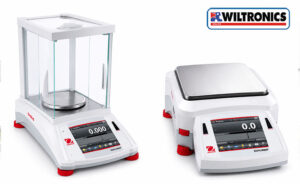
OHAUS Explorer Precision Balances
The OHAUS Explorer Precision Balances represent the flagship of the OHAUS precision weighing range.
Designed for demanding research environments and advanced industrial laboratories, Explorer balances combine exceptional measurement performance with intelligent automation, sophisticated software and premium construction.
These balances are ideal where productivity, precision and traceability are equally important.
Ideal For
- Research laboratories
- Pharmaceutical manufacturing
- Scientific institutions
- Mining laboratories
- Industrial research
- Advanced quality assurance
Premium Features
- Outstanding weighing accuracy
- Advanced internal calibration
- Colour touchscreen
- Intelligent weighing applications
- Comprehensive connectivity
- User management
- GLP/GMP documentation
- Extensive data output
- Premium laboratory construction
Typical Applications
- Pharmaceutical formulation
- Scientific research
- Mining sample preparation
- Environmental laboratories
- Product development
- Advanced quality assurance
Recommended if: Your laboratory requires premium performance, comprehensive connectivity and sophisticated laboratory workflows.
Which OHAUS Precision Balance Should You Choose?
Selecting the right balance depends on the type of laboratory, expected workload and required functionality.
By Laboratory Type
| Laboratory | Recommended Series |
|---|---|
| Secondary School | PR Series |
| TAFE | PR or Pioneer |
| University Teaching | Pioneer |
| University Research | Adventurer or Explorer |
| Pharmaceutical | Adventurer or Explorer |
| Food Laboratory | Pioneer or Adventurer |
| Environmental Laboratory | Pioneer or Explorer |
| Mining Laboratory | Explorer |
| Industrial QA | PR, Pioneer or Adventurer |
By Budget
| Budget | Suggested Series |
|---|---|
| Entry-Level | PR Series |
| Mid-Range | Pioneer Series |
| Professional | Adventurer Series |
| Premium Research | Explorer Series |
Every laboratory is unique, but these comparisons provide an excellent starting point when evaluating the OHAUS range.
Choosing the Right Capacity
Capacity is one of the most important considerations when purchasing a laboratory balance.
Rather than simply selecting the largest available capacity, consider the size of the samples you expect to weigh regularly. Choosing an appropriately sized balance often improves efficiency while maintaining excellent weighing performance.
| Capacity | Typical Applications |
|---|---|
| 220 g | Small research samples, analytical preparation |
| 420 g | General laboratory weighing |
| 620 g | School and university laboratories |
| 1200 g | Chemical preparation |
| 2200 g | Manufacturing quality control |
| 4200 g | Industrial laboratories |
| 6200 g | Large production samples and research |
Laboratory Tip
Selecting a balance with slightly greater capacity than your current requirements provides flexibility for future projects without compromising day-to-day laboratory performance.
Making the Right Investment
Choosing the right OHAUS precision balance is about more than selecting specifications on a datasheet. The ideal balance should match your laboratory’s workflow, weighing applications, reporting requirements and future growth.
Schools may prioritise simplicity and durability, while pharmaceutical laboratories often require advanced documentation, internal calibration and specialised weighing applications. Research facilities may value premium accuracy, automation and extensive connectivity, whereas industrial laboratories often focus on productivity and repeatable quality control.
Understanding these differences helps ensure your investment delivers long-term value while supporting reliable laboratory performance.
In Part 3, we’ll explore calibration, routine maintenance, laboratory best practices, frequently asked questions and practical advice to help you maximise the accuracy and lifespan of your OHAUS precision balance.
Calibration and Maintaining Accuracy
A precision balance is one of the most important measuring instruments in any laboratory. Whether used in education, research, manufacturing or quality assurance, maintaining its accuracy is essential for producing reliable and repeatable results.
Even the highest-quality balance can deliver inaccurate measurements if it is incorrectly installed, poorly maintained or operated in an unsuitable environment. Fortunately, following a few simple laboratory best practices will help ensure your OHAUS precision balance continues to provide dependable performance for many years.
Routine calibration, correct positioning and proper cleaning all contribute to maintaining measurement confidence while protecting your investment.
Positioning Your Precision Balance
The environment in which a balance operates has a significant influence on weighing accuracy.
For the most reliable results, install your balance on a stable laboratory bench that is free from vibration and away from environmental conditions that may influence sensitive measurements.
For optimum performance, position your balance:
- On a rigid, level laboratory bench
- Away from doors and heavy foot traffic
- Away from air conditioning outlets
- Away from open windows
- Away from direct sunlight
- Away from vibrating laboratory equipment
- Away from magnetic fields
- Away from static electricity sources
- In a clean, temperature-controlled environment
Even gentle air movement or vibration can influence highly sensitive laboratory measurements.
Laboratory Tip
Before performing critical measurements, allow the balance to warm up according to the manufacturer’s recommendations. Electronic components become more stable once they reach their normal operating temperature, improving measurement consistency.
Why Calibration Matters
Calibration is essential because even very small weighing errors can affect scientific research, product quality, laboratory experiments and regulatory compliance.
Routine calibration confirms that the balance continues to measure accurately while providing confidence that laboratory results remain reliable over time.
Most laboratories establish regular calibration schedules based on:
- Daily verification
- Weekly performance checks
- Monthly quality reviews
- Annual certified calibration
Laboratories operating under ISO, GLP or GMP quality systems often require documented calibration records as part of their quality management procedures.
Calibration Options
Depending on the OHAUS model selected, balances may include:
External Calibration
Performed using certified calibration weights.
Suitable for many routine laboratory applications.
Internal Calibration
Uses an integrated calibration mechanism to simplify routine accuracy checks while reducing operator intervention.
Automatic Internal Calibration
Available on selected premium models, automatically maintaining weighing accuracy whenever environmental conditions change.
Routine verification using certified calibration weights is also recommended to confirm ongoing performance between scheduled calibrations.
Common Weighing Mistakes
Many weighing errors are caused by simple operating practices rather than faults with the balance itself.
Common mistakes include:
- Overloading the weighing pan
- Weighing warm or hot samples
- Allowing drafts to influence measurements
- Failing to level the balance
- Skipping routine calibration
- Using dirty weighing pans
- Touching calibration weights with bare hands
- Moving the balance between benches without recalibration
- Ignoring warm-up time
- Using damaged weighing containers
Avoiding these common issues helps maximise both accuracy and repeatability.
Routine Cleaning and Care
Regular cleaning protects sensitive weighing mechanisms while extending the working life of your balance.
Good laboratory practice includes:
- Removing dust frequently
- Cleaning spills immediately
- Using suitable laboratory cleaning solutions
- Avoiding excessive moisture
- Cleaning the weighing pan after each use
- Storing calibration weights correctly
- Covering the balance when not in use
Routine maintenance reduces contamination while helping maintain consistent weighing performance.
Extending the Life of Your Balance
Quality laboratory balances are designed to provide many years of reliable service when cared for correctly.
Simple maintenance practices include:
- Avoid overloading the balance
- Transport carefully when relocating
- Store in clean laboratory conditions
- Schedule regular calibration
- Verify accuracy using certified weights
- Keep weighing surfaces clean
- Protect against vibration and dust
These simple procedures help protect your investment while ensuring reliable laboratory performance for years.
Laboratory Applications
OHAUS precision balances are trusted throughout Australia across education, research and industry because they combine dependable accuracy with intuitive operation.
Typical applications include:
Education
Schools, TAFEs and universities use precision balances for:
- Chemistry practicals
- Physics investigations
- Biology laboratories
- Engineering education
- Materials science
Pharmaceutical
Applications include:
- Drug formulation
- Sample preparation
- Product development
- Research
- Quality assurance
Food Manufacturing
Balances support:
- Ingredient verification
- Product consistency
- Recipe formulation
- Laboratory testing
- Quality control
Environmental Science
Common applications include:
- Soil analysis
- Water testing
- Environmental monitoring
- Sample preparation
- Scientific research
Industrial Manufacturing
Laboratories rely on precision balances for:
- Incoming goods inspection
- Process control
- Product verification
- Materials testing
- Quality assurance
Mining
Mining laboratories commonly perform:
- Ore preparation
- Mineral analysis
- Sample weighing
- Geological investigations
- Laboratory quality control
Accessories That Improve Productivity
The right accessories not only improve laboratory efficiency but also help maintain accurate and repeatable measurements.
Popular accessories include:
Calibration Weights
Essential for routine calibration and verification of measurement accuracy.
Density Determination Kits
Allow laboratories to determine the density of solid and liquid materials using precision weighing techniques.
Printers
Provide permanent weighing records for laboratory documentation and quality assurance.
USB and RS232 Interfaces
Enable balances to communicate directly with computers, laboratory software and data management systems.
Protective Covers
Help reduce dust contamination while protecting sensitive weighing components.
Anti-Vibration Tables
Provide additional stability for highly sensitive laboratory weighing applications.
Selecting the appropriate accessories can significantly improve workflow while helping laboratories maintain traceable measurement records.
Why Choose OHAUS?
For more than 100 years, OHAUS has been recognised worldwide as a leader in laboratory weighing technology.
Their precision balances are trusted because they combine:
- Outstanding measurement accuracy
- Excellent repeatability
- Reliable long-term performance
- Robust laboratory construction
- Intuitive operation
- Advanced weighing applications
- Modern connectivity
- Comprehensive calibration options
From education through to pharmaceutical research and industrial quality control, OHAUS balances continue to deliver dependable performance across countless laboratory environments.
Why Buy Your Precision Balance from Wiltronics?
For more than 50 years, Wiltronics has supplied Australian schools, universities, research organisations, government laboratories and industry with quality laboratory equipment and scientific instrumentation.
Our experienced team understands that selecting the right balance involves much more than comparing specifications. We help customers choose weighing equipment that matches their applications, laboratory workflow and future requirements.
Our range includes:
- OHAUS Precision Balances
- OHAUS PR Series Precision Balances
- OHAUS Pioneer Precision Balances
- OHAUS Adventurer Precision Balances
- OHAUS Explorer Precision Balances
Whether you’re purchasing a balance for a secondary school science laboratory, university research facility, pharmaceutical laboratory or industrial quality assurance department, Wiltronics offers dependable products supported by knowledgeable customer service and decades of laboratory experience.
Frequently Asked Questions
What is the difference between a precision balance and an analytical balance?
Precision balances are designed for highly accurate weighing across a broad range of capacities, while analytical balances provide even finer readability for very small samples and typically include enclosed draft shields.
Which OHAUS balance is best for schools?
The PR Series is an excellent choice for schools because it combines reliable laboratory performance with simple operation and outstanding value.
Which balance is recommended for research laboratories?
The Explorer and Adventurer Series provide advanced functionality, premium accuracy and extensive connectivity suitable for professional research laboratories.
How often should a laboratory balance be calibrated?
Calibration frequency depends on laboratory procedures, usage and quality requirements. Many laboratories perform routine verification frequently and schedule certified calibration annually.
What is readability?
Readability is the smallest measurement increment displayed by the balance. Smaller increments provide greater weighing precision.
What is repeatability?
Repeatability measures how consistently a balance produces identical results when weighing the same sample repeatedly.
Can OHAUS balances connect to computers?
Yes. Many models provide USB, RS232 and additional communication options that simplify data collection and laboratory record keeping.
Should I choose internal or external calibration?
Internal calibration offers convenience and automatic accuracy verification, while external calibration provides flexibility using certified calibration weights.
Can precision balances weigh liquids?
Yes, provided liquids are contained within suitable laboratory vessels and remain within the balance’s maximum weighing capacity.
Why do weighing readings sometimes drift?
Air movement, vibration, temperature changes, static electricity and insufficient warm-up time can all influence highly sensitive measurements.
Do precision balances require servicing?
Routine cleaning, calibration and periodic servicing help maintain long-term accuracy and maximise the lifespan of laboratory balances.
What accessories are recommended?
Calibration weights, printers, density determination kits, communication interfaces and protective covers are among the most useful accessories for improving laboratory productivity.
Continue Building Your Laboratory
Wiltronics also supplies a comprehensive range of laboratory equipment designed to complement your weighing equipment.
Explore our related laboratory resources, including:
- OHAUS Electronic Scales & Balances for Schools
- School Science Supplies
- Electronics and Science
- Chemistry Equipment for Schools
- Physics Equipment for Schools
- Biology Equipment for Schools
Together, these products help laboratories create efficient, accurate and well-equipped scientific workspaces.
Invest in Accurate Laboratory Weighing
Choosing the right precision balance is an investment in laboratory accuracy, productivity and long-term reliability.
Whether you’re equipping a secondary school science laboratory, expanding a university research facility, supporting pharmaceutical production or improving industrial quality assurance, selecting the appropriate OHAUS precision balance ensures dependable performance for years to come.
With one of Australia’s largest selections of OHAUS Precision Balances, Wiltronics helps educators, laboratory managers, researchers and industry professionals confidently select weighing equipment that matches their applications today while supporting future growth.
Explore our complete range of OHAUS Precision Balances, including the PR Series, Pioneer Series, Adventurer Series and Explorer Series to find the ideal weighing solution for your laboratory.
© Electrotech Brands Pty Ltd 2026
Write a Comment
You must be logged in to post a comment.