

Electronic Kits for Beginners: Hands-On Learning for Everyone
April 13, 2026
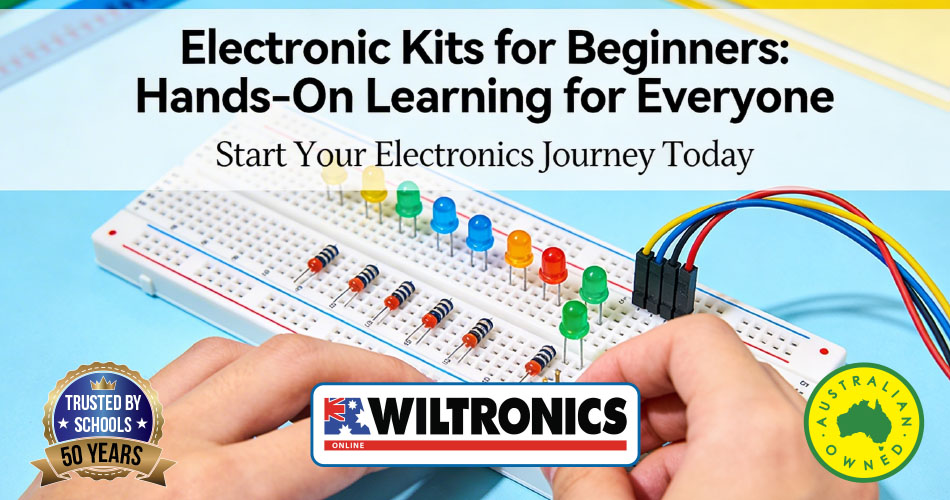
Electronic Kits for Beginners: Hands-On Learning for Everyone
At Wiltronics, we see electronic kits and modules as one of the most practical ways to begin learning electronics. They help turn ideas into something that can be built, tested, observed, and understood. For beginners, that matters. Electronics can feel abstract at first, but a hands-on project gives learners a more direct way to connect theory with real outcomes.
Our Electronic Kits and Modules range includes several different pathways into practical learning. We offer electronic kits, Kemo electronic modules, Dorji 433MHz RF modules, solar educational kits, and STEM construction & electronic project kits, giving students, hobbyists, and makers a variety of ways to get started.
Why Electronics Kits and Modules as a Strong Starting Point
At Wiltronics, we believe beginners usually learn electronics more effectively when they can work with real components and see a result. A kit gives the learner a defined project to assemble. A module gives them a way to explore a specific function inside a system. In both cases, the learning becomes more practical and easier to follow.
We also see value in the flexibility of this category. Not every beginner wants the same starting point. Some people want a guided project with clear steps. Some want to experiment more freely. Some are interested in coding and control. Others are more focused on components, communication, or project-based STEM learning. That is why a broader kits-and-modules category can be so useful.
Electronic Kits: Learning by Building
At Wiltronics, we see traditional electronic kits as one of the clearest entry points for beginners. They provide a structured way to begin building circuits and understanding how different parts of an electronic system work together.
Our broader electronic kit range includes areas such as audio and amplifier kits, counters and timers, DC power, LED and opto kits, security alarm kits, sensors and test equipment, and Short Circuits books and kits.
What we find especially useful about this kind of project-based learning is that it allows beginners to focus on one concept at a time. Instead of trying to understand all of electronics at once, learners can start with a single project, function, or circuit type and build confidence from there.
Highlighted Product:
ARD2 Arduino Compatible Starter Kit – UNO R3 with 16 Projects
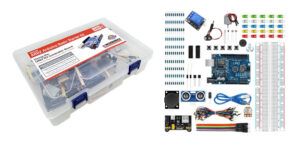
One of the strongest examples in this category is our ARD2 Arduino Compatible Starter Kit – UNO R3 with 16 Projects.
At Wiltronics, we see this as a particularly valuable beginner kit because it combines electronics, coding, structured project work, and curriculum relevance in one package. Rather than giving learners only a loose collection of components, it provides a clearer pathway into practical digital and electronic learning.
This kit is aligned with the Australian F–10 Curriculum: Design and Technologies (Version 8.4), and we see that as one of its major strengths for classroom use. It supports learning in areas such as digital systems, data, problem-solving, prototyping, and the design of functional solutions.
From our perspective, the real value of this kit is the way it introduces learners to a wide range of common components and ideas through guided projects. It includes a Uno R3 Dev Board, resistors, LEDs, buttons, an RGB LED, thermistor, photoresistors, buzzers, breadboard, diodes, transistors, relay, analog joystick, ultrasonic sensor, tilt switch, jumper wires, potentiometer, DC motor, and support ICs such as the 74HC595 and L293D.
That gives beginners exposure to both input and output devices, circuit building, basic control, and prototyping. It also means the learner is not just assembling a single fixed model. They are building a broader foundation.
We also see strong value in the support material that comes with the kit. The included manual provides 16 lessons, installation guidance, schematics, physical wiring diagrams, explained code, component information, and project summaries. In our view, that kind of support is often what makes the difference between a kit that is merely interesting and a kit that is genuinely effective for learning.
STEM Make & Create

At Wiltronics, we also recognise that some learners benefit from a broader entry point than a strictly circuit-based kit. That is where our STEM Construction & Electronic Project Kits category becomes especially useful.
We see these kits as a strong option for learners who are motivated by building, making, and experimentation. Rather than beginning with formal electronics theory, they can begin by working through a project that connects science, robotics, construction, creativity, and practical problem-solving.
For many students, especially in primary and middle school settings, this kind of project-based STEM approach can feel more accessible and more engaging. In our experience, it is often easier to build confidence when learners can see how the parts come together into something purposeful.
Kemo Electronic Modules: A More Focused Path
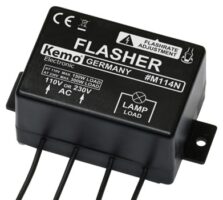
At Wiltronics, we see Kemo electronic modules as an important part of the learning pathway once a beginner starts wanting more targeted functionality.
A kit often introduces a complete project. A module, by contrast, is usually more function-specific. It may support a particular role inside a larger circuit or build. That makes modules useful for learners who are beginning to think beyond simple starter projects and ask more focused questions about control, timing, triggering, or system behaviour.
From our perspective, modules often become more relevant as confidence grows. They are a good next step for learners who want to move from guided builds into more customised experimentation.
RF Modules: Moving Beyond Basic Circuits

We also see the Dorji 433MHz RF Modules range as a useful extension of hands-on learning once the beginner is ready to explore communication-based electronics.
At Wiltronics, we think this is where electronics starts to broaden in a very interesting way. Instead of only dealing with power, light, sound, or motion, learners begin to explore signalling and wireless communication between systems.
This kind of product is usually not the first step for most beginners, but it can be an excellent next stage. Once a learner understands the basics of components, inputs, outputs, and simple control, RF modules can open the door to a more advanced understanding of how electronic systems interact.
Highlighted Product: Dorji 433MHz TX Module GFSK, DIP
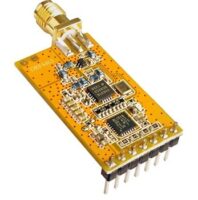
A strong product example in this area is the Dorji 433MHz TX Module GFSK, DIP.
At Wiltronics, we see this as a useful example of how the learning pathway can extend beyond simple circuit construction. This module introduces a more specialised electronics function, with features such as multi-channel operation, GFSK modulation and demodulation, high bandwidth efficiency, and anti-blocking performance.
For us, the importance of a product like this is not that it suits every beginner. It is that it shows how the category supports progression. A learner can start with guided kits and then move toward more specific and technical modules as their understanding grows.
Different Beginners Need Different Starting Points
At Wiltronics, we do not believe there is a single correct first kit for everyone. The best starting point depends on the learner’s age, interests, confidence, and learning style.
For learners who want a strongly guided, project-based pathway, we see the ARD2 Arduino Compatible Starter Kit – UNO R3 with 16 Projects as one of the best examples in the range. It combines coding, electronics, and structured lessons in a way that is especially useful for both schools and individual beginners.
For learners who prefer broader building and experimentation, STEM construction and electronic project kits can provide a more open and approachable introduction.
For learners who are ready to move further into function-specific electronics, modules and RF products provide a more advanced next step.
Why Hands-On Learning Still Matters
At Wiltronics, we continue to see hands-on learning as one of the most effective ways to build confidence in electronics.
When a learner wires a circuit, uploads a program, reads a sensor, or activates an output, they are doing more than following instructions. They are building a practical understanding of how an electronic system behaves. They are seeing the connection between parts, inputs, outputs, and control in a way that theory alone does not always provide.
That is why we continue to see strong value in electronic kits and modules. They give learners a way to test ideas, observe results, and build understanding through action.
Final Thoughts
At Wiltronics, we view electronic kits and modules as an excellent starting point because they make electronics more practical and more approachable. Instead of beginning with theory alone, learners can begin with a project, a guided build, or a module that demonstrates a concept clearly.
Our range supports several different ways of entering hands-on electronics, from traditional kits through to STEM construction projects and more specialised modules. That variety matters because learners do not all begin in the same way.
For us, one of the strongest examples in the category is the ARD2 Arduino Compatible Starter Kit – UNO R3 with 16 Projects, because it shows how modern beginner learning can combine electronics, coding, structured project work, and curriculum alignment in one practical platform.
Whether the goal is classroom learning, hobby exploration, or a first step into building and experimentation, we see kits and modules as one of the most effective ways to begin.
© Electrotech Brands Pty Ltd 2026
Write a Comment
You must be logged in to post a comment.