

Core Electrical Tools Every Functional Laboratory Needs
March 3, 2026
Core Electrical Tools Every Laboratory Needs
Electrical investigation sits at the heart of modern Physics and STEM education. From simple circuit construction in Year 7 to waveform analysis in VCE Physics, the right laboratory equipment transforms theory into measurable outcomes.
This guide outlines the four foundational electrical equipment categories every Australian secondary school should prioritise.
Building a Scalable Electrical Lab
| Year Level | Equipment Priority |
|---|---|
| Years 7–8 | Multimeters + leads |
| Years 9–10 | Add bench power supplies |
| VCE Units 1–2 | Structured electrical investigations |
| VCE Units 3–4 | Oscilloscope integration |
Electrical equipment should be layered — not purchased randomly.
A strategic rollout allows schools to:
-
Spread budget across years
-
Upgrade gradually
-
Build teacher confidence
-
Improve student experimental outcomes
1. Digital and Analog Multimeters
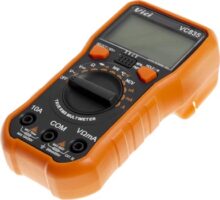
A digital multimeter is the most used electrical instrument in a school lab.
What It Measures
-
Voltage (AC/DC)
-
Current
-
Resistance
-
Continuity
-
Diode testing
Why Every Student Needs Access
In Years 7–8, multimeters introduce:
-
Basic circuit verification
-
Understanding current flow
-
Safe testing procedures
In Years 9–10:
-
Ohm’s Law validation
-
Series vs parallel circuit analysis
-
Internal resistance investigation
In VCE Physics Units 1–4:
-
Experimental validation
-
Measurement uncertainty
-
Data collection for electrical investigations
What Schools Should Look For
-
Clear LCD display
-
Fused current inputs
-
Overload protection
-
Durable casing
-
Replaceable leads
Class sets are ideal — one per student pair improves engagement and reduces bottlenecks.
2. Bench Power Supplies
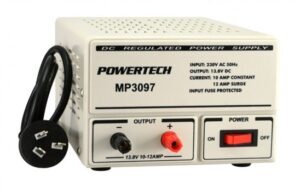
A regulated bench power supply provides safe, stable voltage for structured experimentation.
Why It Matters
Battery packs limit flexibility. Bench supplies allow:
-
Adjustable voltage
-
Adjustable current limiting
-
Repeatable experiments
-
Controlled safety conditions
Curriculum Application
Years 9–10
-
Current vs voltage graphs
-
Resistor behaviour
-
LED forward voltage testing
VCE Physics Units 3–4
-
Field investigations
-
Circuit modelling
-
Power dissipation experiments
Recommended Features
-
Current limiting (student safety)
-
Dual outputs (teacher demonstrations)
-
Clear voltage/current displays
-
Short-circuit protection
Investing in quality regulated supplies reduces maintenance and improves experiment reliability.
3. Banana Plugs & Safety Leads
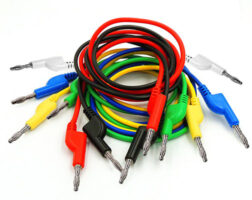
Often overlooked — but critical.
Banana plugs and test leads are the connective infrastructure of every electrical experiment.
Why They Are Strategic SKUs
-
High rotation
-
Frequent replacement
-
Low cost / high volume
-
Required across multiple year levels
Education-Specific Requirements
-
4mm shrouded safety connectors
-
Flexible silicone insulation
-
Colour-coded leads (red/black/green/yellow)
-
Stackable connectors for complex circuits
Without reliable leads, even the best equipment fails in practice.
This category represents strong repeat purchasing for schools and should always be well stocked.
4. Oscilloscopes (Senior Level)
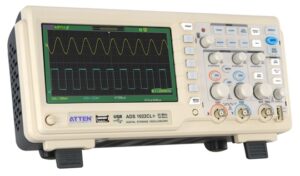
Oscilloscopes elevate electrical education from measurement to analysis.
What They Enable
-
Waveform visualisation
-
AC signal analysis
-
Frequency measurement
-
Signal distortion studies
-
Induction investigations
Senior Curriculum Alignment
VCE Physics Units 3–4
-
AC theory
-
Electromagnetic induction
-
Signal behaviour
-
Practical investigation design
Oscilloscopes introduce students to real-world laboratory instrumentation used in engineering, electronics and tertiary study.
What Schools Should Consider
-
Digital storage capability
-
USB export for data logging
-
Dual channel minimum
-
Clear graphical interface
-
Protective casing for classroom durability
Not every lab requires multiple oscilloscopes — but at least one per senior physics room significantly strengthens investigative depth.
Why Electrical Equipment Is a Smart Investment
Electrical experiments:
-
Are low consumable cost
-
Offer repeatable setups
-
Support cross-curricular STEM integration
-
Align with ACARA & VCAA standards
-
Develop problem-solving skills
They also integrate seamlessly with:
-
Arduino platforms
-
Robotics kits
-
Data logging systems
-
Engineering electives
Final Thought
Electrical understanding is foundational to modern science and engineering.
A well-equipped school lab should not rely on outdated batteries and damaged leads. It should provide students with:
-
Accurate measurement tools
-
Safe regulated power
-
Reliable connectivity
-
Senior-level analytical capability
Invest in infrastructure that scales from Year 7 to VCE — and supports genuine experimental science.
Core Electrical Tools Every Laboratory Needs
© Electrotech Brands Pty Ltd 2026
Write a Comment
You must be logged in to post a comment.