

Classroom Visual Learning Tools for Science
April 20, 2026
Classroom Visual Learning Tools for Science
At Wiltronics, we know that strong science learning is not only shaped by practical equipment and lesson delivery. It is also influenced by what students see around them every day. When key ideas remain visible in the classroom, they become more familiar, easier to recall, and less intimidating to engage with. That is why visual learning tools can play such an important role in science education.
In our view, classroom visual learning tools help make science feel present rather than occasional. They keep concepts in sight between lessons, reinforce patterns and terminology through repeated exposure, and help create a room that feels active, purposeful, and clearly science-focused. Our recent Knowledge Base article on visual learning in science makes exactly that case, particularly through chemistry displays and classroom reference tools.
The most useful point here is that visual learning in science does not have to rely on a single product type. At Wiltronics, we see value in a broader mix of tools, including chemistry charts, acrylic display pieces, biological models, microscopes, and other classroom reference aids that make scientific structures and systems easier to see and remember. Our live categories across chemistry equipment, biology equipment, chemistry charts, and microscopes support that wider approach.
Why Visual Learning Matters in Science
At Wiltronics, we see visual learning as especially important in science because so many scientific ideas depend on patterns, symbols, structures, systems, and classification. Students are expected to interpret diagrams, understand grouped information, connect models to real-world observations, and recognise the relationships between parts of a system. Those tasks become easier when the concepts are not hidden away until the moment they are taught.
When students regularly see science concepts around them, familiarity builds over time. A periodic table displayed every day becomes easier to navigate later. A biology model kept in view helps make anatomical language less abstract. A microscope demonstration projected or shared visually can help students understand what they should be observing before they begin practical work themselves. These are practical inferences, but they are strongly supported by Wiltronics’ recent visual-learning article and classroom microscopy guidance.
Chemistry Displays: Keeping Key Reference Material Visible
At Wiltronics, we see chemistry as one of the clearest areas where visual learning tools make a difference. The periodic table is a strong example. It is not simply a poster or chart. It is a reference structure that students return to repeatedly as they learn about symbols, groups, periods, properties, and elemental relationships. When it stays visible in the room, it becomes part of the learning environment rather than something that only appears during a specific lesson.
Highlighted Product: Periodic Table of the Elements in Acrylic – LQ7905
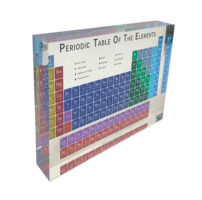
One of the most useful products in this area is our Periodic Table of the Elements in Acrylic – LQ7905. The product page describes it as a clear acrylic display block with a full-colour periodic table and a freestanding format, designed for educational reference and display. At Wiltronics, we see this product as especially useful because it works differently from a wall chart. It can sit directly on a teacher desk, lab bench, shelf, or classroom display area, which helps keep chemistry visible at eye level every day.
Our Chemistry Charts category also supports this broader classroom-display approach. It includes products such as the Chemistry Chart – Periodic Table of the Elements with Illustrations, the Periodic Table of the Elements with Properties, A4 periodic table packs, and an acrylic periodic table with samples. In our view, this matters because different classrooms benefit from different visual formats. A wall chart offers broad room visibility, while a freestanding acrylic display creates a more permanent and desk-level reference point.
Biology Models: Making Structures Easier to Understand
At Wiltronics, we also see biology as a major area where visual learning tools can support stronger understanding. Biological systems are often difficult for students because they involve layered structures, specialised terminology, and relationships between parts that are not always easy to imagine from text alone. This is where models become especially useful. Our Biology Equipment range includes biological models, dissecting tools, petri dish accessories, scalpels, spotting plates, and more, all framed as essential for biological studies such as visualising cells and organelles, preparing samples, and dissecting specimens.
Highlighted Product: 4D Human Heart Anatomy Model – BM2380
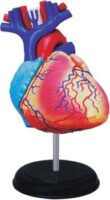
A good example of this approach is the 4D Human Heart Anatomy Model, which appears as a featured product in the Biology Equipment category. At Wiltronics, we see anatomy models like this as useful because they turn internal structures into something students can inspect more directly. A model provides a visual and physical reference that helps bridge the gap between diagram-based learning and a clearer understanding of how body systems are organised.
Our 4D Human Anatomy Models category extends that idea further. The category explains that these models provide detailed visual representations of anatomy, can be disassembled to reveal internal structures, and include explanatory booklets. Wiltronics positions them as ideal for schools, universities, and medical practices because they help students learn basic anatomy. At Wiltronics, we see this category as a strong example of how visual learning tools can move beyond flat reference material into something interactive and spatial.
Microscopes as Visual Learning Tools
At Wiltronics, we do not think of microscopes only as lab equipment. They are also powerful visual learning tools. Our recent biology classroom content explains that modern classroom microscopes can support screen sharing, digital viewing, prepared slides, and accessible specimen work for schools. That means microscopes can reinforce science visually not only through individual observation, but also through teacher-led demonstration and shared discussion.
This is important because science understanding often improves when students can all see the same thing clearly. A projected digital microscope view, for example, can help the whole class identify structures, compare features, and understand what they should be looking for before starting their own microscope work. That practical teaching value is reflected in Wiltronics’ microscopy guidance, which highlights digital microscopes for screen sharing and classroom explanation.
Highlighted Product: Wi-Fi Digital Microscope
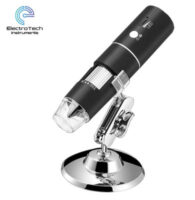
A strong product example here is the Wi-Fi Digital Microscope, which appears in Wiltronics’ current microscopy content as a classroom-supportive digital tool. The Knowledge Base notes that it allows real-time image sharing to mobile devices and tablets, helping teachers demonstrate specimens more clearly and support group discussion. At Wiltronics, we see that kind of tool as especially valuable when the goal is not only observation, but shared visual explanation.
Molecular and Structural Models in Chemistry
Visual learning in science is not limited to charts and anatomy. At Wiltronics, we also see strong value in structural models that help students picture what they cannot directly see. Our Chemistry Equipment category features products such as a Graphite Molecular Model Set, alongside other chemistry apparatus. Even though the category is broad, the inclusion of molecular modelling tools supports a more visual and spatial way of teaching chemical structure.
Highlighted Product: Molecular Model Kit (179 Pieces)
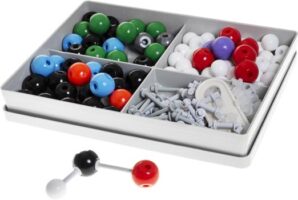
A useful example is the Molecular Model Kit (179 Pieces). At Wiltronics, we see this kind of product as valuable because chemical bonding, molecular geometry, and three-dimensional structure are often difficult to communicate through text alone. A model kit gives students a way to build and visualise those relationships in physical form, which can make chemistry more intuitive and easier to remember. The educational value here is an inference, but it is a standard and well-supported one given the role of molecular model kits in chemistry teaching.
Visual Learning Tools Help Create a Science-Focused Environment
At Wiltronics, we think one of the most overlooked benefits of visual learning tools is the way they help shape the classroom itself. A science room with visible reference material, models, display pieces, and teaching tools feels different from a room where science only appears when a textbook is opened or a worksheet is handed out. Our recent Knowledge Base article on visual learning makes this point clearly: visual products can help create a classroom environment that feels active, purposeful, and science-focused.
This matters because classroom atmosphere influences engagement. A periodic table on display, a biology model on the bench, and a microscope ready for demonstration all help reinforce the identity of the room as a place for scientific thinking and investigation. At Wiltronics, we see these tools not only as references, but as part of building a stronger learning environment overall. This is an inference, but it follows directly from the way Wiltronics frames visual learning and classroom-science spaces.
Choosing a Mix of Visual Learning Tools
At Wiltronics, we do not think the best science classroom relies on a single display item. The strongest setups usually combine different kinds of visual supports.
For chemistry, that may mean a freestanding acrylic periodic table plus larger wall charts or structural models.
For biology, it may mean anatomy models, microscopes, and supporting classroom tools that help move between model-based learning and direct observation.
For practical teaching, digital tools such as Wi-Fi microscopes can support shared viewing and explanation, while permanent display pieces keep core ideas visible between lessons.
In our view, the key is not to treat visual learning as decoration. The most useful products are the ones that actively reinforce what students are expected to recognise, understand, and use over time. That conclusion is an inference, but it is strongly consistent with Wiltronics’ current education content.
Final Thoughts
At Wiltronics, we see classroom visual learning tools as an important part of effective science teaching. They help students become more familiar with scientific language, structures, and systems through repeated exposure. They make abstract ideas easier to picture. And they help turn a classroom into a space where science remains visible every day, not just during a single lesson.
Whether that visibility comes through a Periodic Table of the Elements in Acrylic, a 4D anatomy model, a digital microscope, or a molecular model kit, the purpose is the same: to make science concepts easier to see, understand, and remember. At Wiltronics, we believe that is one of the simplest ways to help reinforce stronger science learning over time.
© Electrotech Brands Pty Ltd 2026
Write a Comment
You must be logged in to post a comment.