

Best School Soldering Stations for STEM Classrooms in Australia
May 25, 2026
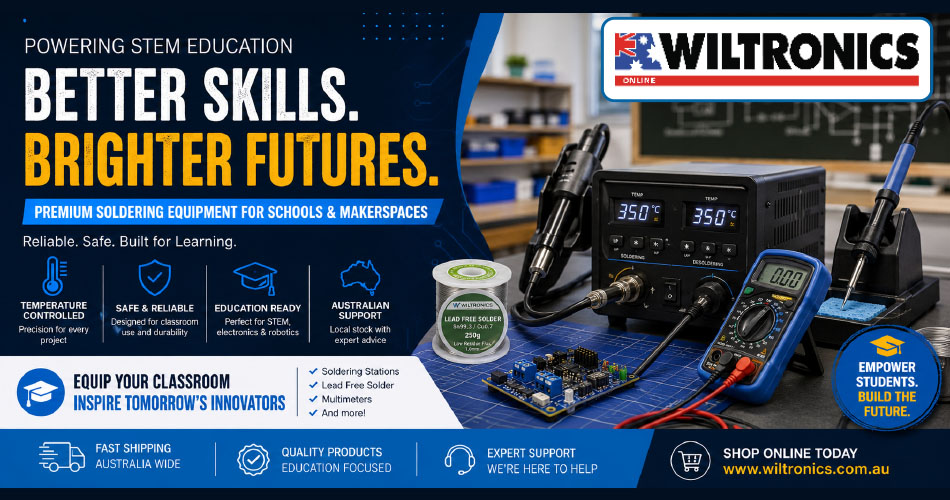
Best School Soldering Stations for STEM Classrooms in Australia
School soldering stations are essential tools in modern STEM classrooms, helping students learn electronics, robotics, engineering, and PCB assembly through hands-on practical education.
From Arduino projects and robotics systems to engineering prototypes and electronics repair, soldering teaches students valuable technical skills that support future pathways in technology, manufacturing, and design.
For Australian schools, TAFEs, makerspaces, and STEM programs, choosing the right soldering equipment improves classroom safety, student confidence, electronics project reliability, and long-term equipment durability.
Why Schools Need Temperature-Controlled Soldering Stations
Many beginner soldering irons lack stable temperature control, making electronics work harder for students and increasing the risk of damaging components.
Temperature-controlled soldering iron stations provide stable operating temperatures, faster heat recovery, better solder flow, improved PCB protection, and safer classroom operation.
For STEM education, robotics workshops, and electronics electives, temperature-controlled soldering stations are the preferred option for practical classroom learning.
Best Soldering Stations for STEM Classrooms
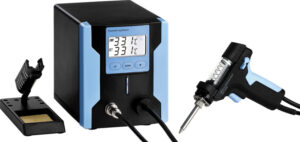
The Temp Controlled Vacuum Desolder Station 90W is a strong option for school electronics classrooms, service areas, and advanced STEM workshops. It features a 90W ceramic heating element, vacuum pump, 160°C to 480°C adjustable temperature range, ESD-safe design, and included desoldering tips.
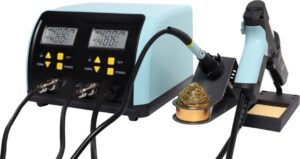
For more advanced setups, the Micron Combination 60W Soldering & 90W Vacuum Desoldering Station combines soldering and vacuum desoldering in one unit, with electronically controlled temperature, ceramic heating elements, separate soldering and desoldering tools, and a 160°C to 480°C temperature range.
These stations are well suited for STEM classrooms, electronics workshops, robotics projects, PCB assembly, engineering classes, makerspaces, and TAFE training environments.
How to Choose a Soldering Station for Schools
When comparing school soldering stations, look for adjustable temperature control, replaceable tips, durable construction, safe iron stands, ESD-safe design, clear temperature displays, and classroom-friendly accessories.
Most classroom soldering projects benefit from a controlled temperature range, especially when students are working with PCBs, electronics kits, and small components.
Schools should also consider long-term consumables such as solder, replacement tips, cleaning accessories, and desoldering tools.
Soldering Station vs Basic Soldering Iron
| Feature | Basic Soldering Iron | Temperature-Controlled Soldering Station |
|---|---|---|
| Temperature Stability | Limited | Excellent |
| Best for Schools | Basic use only | Ideal |
| Electronics PCB Work | Difficult | Excellent |
| Safety Features | Minimal | Improved |
| Replaceable Tips | Sometimes | Yes |
| Long-Term Durability | Lower | Higher |
| Suitable for STEM Education | Limited | Excellent |
For schools teaching electronics and robotics, soldering iron stations provide better performance, precision, and safety than entry-level fixed-temperature irons.
Best Solder for School Electronics Projects
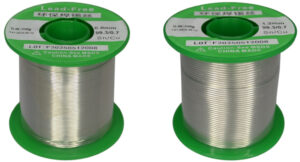
Using quality Lead Free Solder 250g helps students create cleaner and more reliable solder joints during STEM electronics projects. Wiltronics describes this solder as suitable for Australian schools, STEM programs, PCB work, kits, and classroom projects, with Sn99.3/Cu0.7 solder and low-corrosive flux.
Lead-free solder is ideal for Arduino projects, robotics kits, PCB assembly, engineering activities, electronics education, STEM clubs, makerspaces, and VET programs.
Essential Soldering Safety Equipment for Schools
A complete STEM soldering workstation should include a temperature-controlled soldering station, iron stand, tip cleaner, heat-resistant work surface, side cutters, PCB holder, ventilation or fume extraction, and eye protection.
Solder fumes can irritate the respiratory system, particularly in busy classroom environments where multiple students are soldering at the same time. Schools operating larger electronics labs should strongly consider dedicated ventilation and extraction systems for ongoing classroom soldering activities.
How to Set Up a School Soldering Workstation
A well-organised soldering workstation improves safety, workflow, and student learning outcomes.
An ideal classroom soldering workstation may include:
- Temperature-controlled soldering station
- Lead-free solder
- Digital multimeter
- Helping hands or PCB holder
- Side cutters
- Solder wick
- Storage trays
- Fume extraction
- Electronics tools
Many Australian schools now integrate soldering workstations into robotics programs, Arduino learning, engineering electives, makerspaces, prototype design activities, and STEM innovation labs.
Common Mistakes Schools Make When Buying Soldering Equipment
Buying Cheap Fixed-Temperature Irons
Basic soldering irons are often harder for students to use successfully because they lack stable heat control. Temperature-controlled stations provide cleaner solder joints and a better classroom experience.
Ignoring Safety Equipment
Some schools focus only on soldering irons while overlooking fume extraction, heat-resistant mats, tip cleaners, iron stands, and cable management.
Underestimating Classroom Usage
School soldering stations may operate for many hours every week across multiple classes. Choosing durable equipment helps reduce long-term maintenance and replacement costs.
Why Soldering Skills Matter in STEM Education
Practical soldering projects help students develop engineering thinking, precision hand skills, electronics troubleshooting, technical confidence, and creative problem-solving.
Hands-on electronics education also helps students connect classroom theory with real-world engineering applications.
Soldering skills are increasingly valuable across robotics, automation, renewable energy, electronics manufacturing, product design, embedded systems, and repair work.
Frequently Asked Questions About School Soldering Stations
What is the best soldering station for schools?
Temperature-controlled soldering stations are generally the best option for schools because they provide safer operation, stable heat control, and better reliability for STEM classroom use.
Are soldering stations safe for students?
Yes. With proper supervision, ventilation, and safety procedures, soldering stations are widely used in Australian schools, TAFEs, and STEM education programs.
What temperature should students solder at?
Most classroom electronics projects are completed between 320°C and 380°C depending on solder type and component size.
Why do schools use lead-free solder?
Lead-free solder supports safer classroom practices and aligns with modern electronics manufacturing standards.
What equipment should every school soldering workstation include?
Most school soldering workstations should include a temperature-controlled station, iron stand, lead-free solder, multimeter, tip cleaner, side cutters, and ventilation or fume extraction.
Explore School Soldering Equipment at Wiltronics
Wiltronics supplies soldering equipment, soldering iron stations, lead-free solder, multimeters, and electronic test equipment suitable for Australian schools, makerspaces, engineering workshops, and technical education environments.
© Electrotech Brands Pty Ltd 2026
Write a Comment
You must be logged in to post a comment.