

Battery Buying Guide Australia | Industrial, Trade & Commercial Batteries
July 6, 2026
Battery Buying Guide Australia | Industrial, Trade & Commercial Batteries
Every electrical system relies on one critical component—the right battery. Whether powering emergency lighting in commercial buildings, maintaining memory in industrial PLCs, supporting off-grid solar installations or keeping portable test equipment operating in the field, selecting the correct battery technology directly affects reliability, safety, equipment life and long-term operating costs.
For electricians, maintenance technicians, engineers, installers and industrial operators, batteries are far more than consumable products. They are essential components that keep businesses operating, protect critical infrastructure and ensure equipment is ready whenever it’s needed. A poor battery choice can lead to unexpected downtime, equipment failures and unnecessary replacement costs, while selecting the correct battery technology can improve performance, reduce maintenance and extend service life.
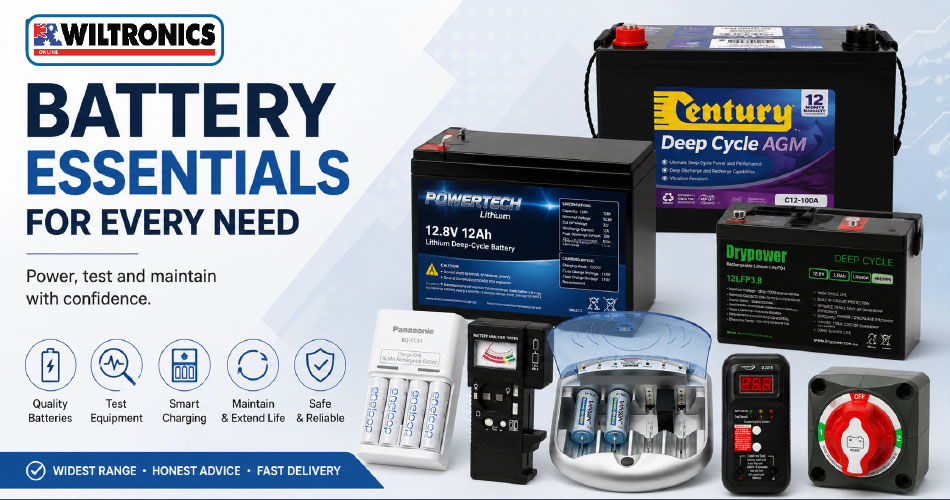
At Wiltronics, we supply one of Australia’s most comprehensive ranges of batteries and power solutions for electrical trades, industry, education and commercial applications. Our extensive range includes Batteries – Electrical Trades, Alkaline Batteries, Extra Heavy Duty Batteries, 6V & 12V Sealed Lead Acid Batteries, Century PSA Series Batteries, 12V Deep Cycle Batteries, 12V LiFePO₄ Batteries, PLC Lithium Batteries and Battery Chargers & Testers.
Whether you’re specifying batteries for industrial equipment, maintaining critical backup systems, upgrading renewable energy storage or simply looking for the most reliable replacement battery, this guide explains the major battery technologies, compares their strengths and applications, and helps you confidently select the right solution for your needs.
At a Glance
| If You Need… | Recommended Battery Type |
|---|---|
| Everyday portable electronics | Alkaline |
| Budget, low-drain devices | Extra Heavy Duty |
| Frequently used equipment | Rechargeable |
| Alarm panels & emergency systems | Sealed Lead Acid |
| Standby backup power | Century PSA |
| Solar & renewable energy | LiFePO₄ |
| Marine, caravans & off-grid power | Deep Cycle |
| PLC memory backup | PLC Lithium |
In This Guide
- Why Battery Choice Matters
- Understanding Battery Technologies
- Primary vs Rechargeable Batteries
- Alkaline Batteries
- Extra Heavy Duty Batteries
- Rechargeable Batteries
- Sealed Lead Acid Batteries
- Century PSA Series Batteries
- Deep Cycle Batteries
- LiFePO₄ Batteries
- PLC Lithium Batteries
- Battery Chargers & Testers
- Understanding Battery Specifications
- Choosing the Right Battery
- Industrial Applications
- Battery Storage & Maintenance
- Frequently Asked Questions
Why Battery Choice Matters
Selecting the correct battery is about much more than replacing a flat cell. The right battery improves equipment reliability, reduces maintenance, lowers operating costs and ensures critical systems continue operating when they’re needed most.
Across trade and industry, batteries support countless essential applications, from portable instruments and wireless sensors through to emergency lighting, telecommunications, industrial automation and renewable energy storage.
Using the wrong battery technology can result in:
- Reduced operating life
- Unexpected equipment failures
- Increased maintenance
- Higher replacement costs
- Poor charging performance
- Reduced system reliability
- Safety risks in critical applications
By understanding battery chemistry and selecting products designed for the intended application, organisations can significantly improve equipment performance while reducing the total cost of ownership.
Reliability & Reducing Downtime
For many industries, battery failure means more than replacing a power source.
It can mean:
- A security system losing backup protection
- Emergency lighting failing during a power outage
- Production equipment stopping unexpectedly
- Communication systems becoming unavailable
- Portable test equipment running flat on-site
- Valuable data being lost from industrial control systems
Choosing a battery designed for the operating environment helps minimise downtime while improving long-term reliability.
Typical Trade Applications
- Electricians servicing emergency lighting
- Fire technicians maintaining alarm panels
- Security installers commissioning access control systems
- HVAC technicians using portable measuring equipment
- Communications technicians servicing backup systems
Understanding Battery Technologies
Modern batteries are manufactured using several different chemistries, each designed to provide specific performance characteristics.
Some battery technologies prioritise long shelf life, while others focus on repeated charging, high current delivery or continuous standby operation.
Broadly speaking, batteries fall into two main categories.
Primary Batteries
Primary batteries are designed for single-use applications and are replaced once discharged.
Examples include:
- Alkaline batteries
- Extra Heavy Duty batteries
- Lithium primary batteries
- Coin cells
- Button cells
These batteries offer excellent shelf life and require no charging equipment, making them ideal for portable electronic devices and emergency spares.
Rechargeable Batteries
Rechargeable batteries are designed to be charged and discharged repeatedly, reducing long-term operating costs while minimising waste.
Examples include:
- NiMH rechargeable batteries
- Sealed Lead Acid batteries
- Deep Cycle batteries
- LiFePO₄ batteries
Rechargeable batteries are commonly selected for equipment that operates regularly or requires extended runtime.
Understanding Battery Chemistry
Different battery chemistries provide different advantages.
For example:
- Alkaline batteries offer long shelf life and excellent all-round performance.
- Extra Heavy Duty batteries provide an economical solution for low-drain devices.
- Sealed Lead Acid batteries are ideal for standby power and emergency systems.
- Deep Cycle batteries deliver sustained power over extended periods.
- LiFePO₄ batteries provide exceptional cycle life, fast charging and reduced weight.
- PLC Lithium batteries maintain memory backup for industrial automation equipment.
Selecting the appropriate chemistry ensures the battery performs as intended while maximising equipment reliability.
Choosing the Right Battery Starts with Understanding the Technology
Every battery has been engineered with a specific purpose in mind.
Some are designed to provide years of reliable standby power, others deliver continuous energy for renewable systems, while others offer exceptional portability for handheld electronic equipment.
Understanding battery chemistry is the key to selecting the right power source for your equipment. While many batteries share similar voltages or physical dimensions, they are engineered for very different purposes. Some are designed to deliver high current over short periods, others provide continuous power over many hours, while specialist batteries are optimised for standby operation or preserving memory in industrial control systems.
Choosing the correct battery technology improves equipment reliability, extends service life and reduces maintenance costs. It also ensures batteries perform safely under the conditions for which they were designed.
The following sections explain the most common battery technologies available from Wiltronics and where each performs best.
Alkaline Batteries
For electricians, technicians and maintenance professionals, Alkaline Batteries remain the benchmark for portable electronic equipment.
Designed for dependable everyday performance, alkaline batteries offer an excellent balance of energy density, shelf life and affordability. They are suitable for countless commercial, industrial and household applications where reliable portable power is essential.
Because alkaline batteries have a long storage life, they are also widely used as spare batteries for emergency equipment and field service kits.
Ideal Applications
Alkaline batteries are commonly used in:
- Digital multimeters
- Clamp meters
- Insulation testers
- Portable measuring instruments
- LED torches
- Wireless microphones
- Medical equipment
- Smoke alarms
- Remote controls
- Security devices
- Portable radios
- Consumer electronics
Key Benefits
- Excellent shelf life
- Reliable everyday performance
- Wide range of standard sizes
- Good performance in moderate-drain equipment
- No charging equipment required
- Cost-effective for occasional use
Buying Advice
If your equipment is used only occasionally or remains stored for long periods, alkaline batteries are often the most economical and reliable choice.
Extra Heavy Duty Batteries
Extra Heavy Duty Batteries provide an economical solution for equipment with relatively low power consumption.
While they do not offer the runtime of alkaline batteries, they remain an excellent choice for low-drain applications where batteries are replaced infrequently.
Typical Applications
Extra Heavy Duty batteries are well suited to:
- Wall clocks
- Basic radios
- TV remote controls
- Calculators
- Low-power toys
- Simple portable electronics
Advantages
- Economical purchase price
- Suitable for low-drain equipment
- Readily available
- Good for occasional use
Not Recommended For
Heavy duty batteries are generally unsuitable for:
- Digital cameras
- Professional test equipment
- High-output LED torches
- Medical equipment
- Portable communication devices
- High-drain industrial electronics
Buying Tip
Spending slightly more on alkaline batteries often delivers substantially longer operating life in professional equipment, reducing replacement frequency and labour costs.
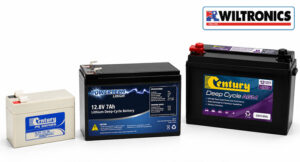
Rechargeable Batteries
Rechargeable batteries provide one of the most cost-effective solutions for equipment that is used regularly.
Rather than replacing batteries after each discharge, rechargeable cells can be reused hundreds of times using a compatible charger, significantly reducing long-term operating costs while minimising environmental waste.
Rechargeable batteries are commonly used in:
- Portable inspection lights
- Wireless microphones
- Handheld electronic devices
- Portable measuring instruments
- Communication equipment
- Educational equipment
Advantages
- Lower long-term ownership costs
- Reduced battery waste
- Consistent voltage output
- Excellent for frequently used equipment
- Environmentally responsible
Considerations
Rechargeable batteries should always be charged using equipment designed for the appropriate battery chemistry.
Wiltronics offers a comprehensive range of Battery Chargers & Testers to help maximise battery performance and service life.
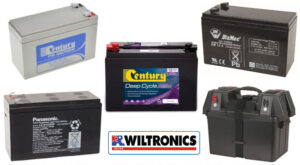
Sealed Lead Acid (SLA) Batteries
6V & 12V Sealed Lead Acid Batteries remain one of the most widely used rechargeable battery technologies for standby and backup power applications.
Designed to remain continuously connected to charging systems, SLA batteries automatically provide power whenever mains electricity is interrupted, making them an essential component in many commercial buildings and industrial facilities.
Common Applications
Sealed Lead Acid batteries are widely used in:
- Emergency lighting
- Fire indicator panels
- Security alarm systems
- CCTV backup power
- UPS systems
- Telecommunications
- Access control
- Medical equipment
- Industrial monitoring systems
Advantages
- Proven and reliable technology
- Wide range of capacities
- Cost-effective standby power
- Low maintenance
- Dependable long-term performance
Buying Advice
For backup power systems, always select the battery capacity and chemistry recommended by the equipment manufacturer to ensure compliance and reliable emergency operation.
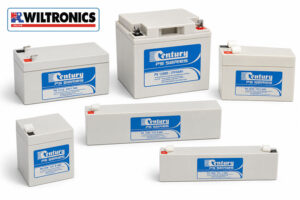
Century PSA Series Batteries
The Century PSA Series Batteries have been specifically developed for professional standby applications where long-term reliability is essential.
Unlike general-purpose batteries, the PSA Series is optimised for continuous float charging, making it ideal for emergency systems that must remain operational even after long periods without use.
Typical Users
Century PSA batteries are commonly selected by:
- Electrical contractors
- Fire protection technicians
- Security installers
- Building maintenance teams
- Telecommunications providers
- Industrial facilities
Common Applications
- Security alarm systems
- Emergency lighting
- Fire detection systems
- UPS installations
- Telecommunications equipment
- Access control systems
Trade Tip
Replacing standby batteries before the end of their expected service life is considerably less expensive than responding to a system failure during an emergency.
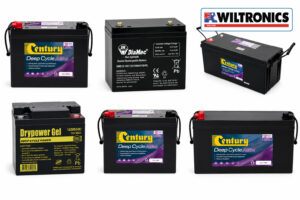
Deep Cycle Batteries
Unlike automotive starting batteries, 12V Deep Cycle Batteries are engineered to deliver continuous power over extended periods while tolerating repeated charging and discharging.
This makes them the preferred choice wherever stored energy must power equipment for hours rather than seconds.
Popular Applications
Deep cycle batteries are widely used in:
- Caravans
- Camper trailers
- Four-wheel drives
- Marine vessels
- Portable refrigeration
- Solar installations
- Electric fencing
- Mobile workshops
- Off-grid power systems
Advantages
- Designed for repeated discharge
- Excellent energy storage
- Reliable off-grid performance
- Suitable for renewable energy
- Long service life when maintained correctly
Starting Battery vs Deep Cycle
| Starting Battery | Deep Cycle Battery |
|---|---|
| High current for engine starting | Continuous power delivery |
| Short discharge periods | Long discharge periods |
| Not designed for repeated deep discharge | Designed for repeated cycling |
| Automotive use | Solar, marine and portable power |
Understanding this difference is essential when selecting batteries for recreational vehicles, marine applications and renewable energy systems.
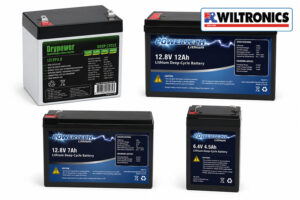
LiFePO₄ Batteries
12V LiFePO₄ Batteries are rapidly becoming the preferred battery technology for many portable and renewable energy applications.
Lithium Iron Phosphate (LiFePO₄) batteries combine excellent cycle life with reduced weight, fast charging and outstanding efficiency, making them an increasingly popular replacement for conventional lead acid batteries.
Ideal Applications
LiFePO₄ batteries are commonly used in:
- Solar energy storage
- Caravan power systems
- Marine applications
- Portable power stations
- Mining vehicles
- Service vehicles
- Mobile workshops
- Off-grid installations
LiFePO₄ vs Sealed Lead Acid
| Feature | LiFePO₄ | Sealed Lead Acid |
|---|---|---|
| Weight | Lightweight | Heavier |
| Cycle Life | Thousands of cycles | Hundreds of cycles |
| Charging Speed | Fast | Slower |
| Usable Capacity | High | Lower |
| Maintenance | Minimal | Low |
| Long-Term Value | Excellent | Good |
Although LiFePO₄ batteries generally require a higher initial investment, their significantly longer lifespan often provides a lower total cost of ownership.
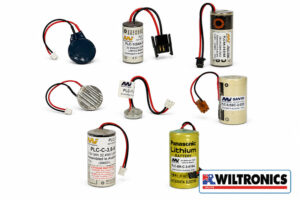
PLC Lithium Batteries
One of the more specialised battery categories available from Wiltronics is PLC Lithium Batteries.
These batteries provide memory backup for Programmable Logic Controllers (PLCs) and other industrial control systems, preserving programs and operational data whenever equipment is powered down.
Because unexpected memory loss can result in costly production downtime, replacing PLC backup batteries during scheduled maintenance is considered best practice throughout industry.
Typical Applications
PLC lithium batteries are commonly found in:
- Factory automation
- Manufacturing plants
- Robotics
- Packaging machinery
- Industrial process control
- CNC machinery
- OEM equipment
- Building automation systems
Advantages
- Long service life
- Reliable memory retention
- Stable performance
- Low self-discharge
- Designed specifically for industrial automation
Making an Informed Choice
Battery technology continues to evolve, providing better performance, longer service life and improved efficiency across almost every industry. Understanding the strengths of each battery type allows electricians, technicians, engineers and maintenance professionals to select products that match both current operational requirements and future reliability expectations.
Maintenance, Safety & Maximising Battery Performance
Selecting the correct battery is only part of the equation. How a battery is charged, tested, stored and maintained has a significant impact on its performance, lifespan and reliability.
Whether you’re maintaining emergency lighting in a commercial building, servicing mining equipment, operating an off-grid solar system or managing industrial automation, implementing good battery management practices helps maximise equipment availability while reducing maintenance costs and unexpected failures.
Professional organisations understand that battery maintenance is preventative maintenance. Investing in quality charging equipment, regular testing and correct storage practices protects both your batteries and the systems they power.
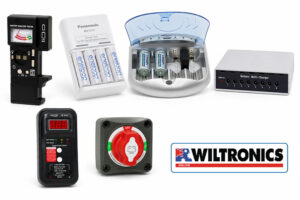
Battery Chargers & Testers
A quality battery charger is one of the most valuable tools for anyone using rechargeable batteries.
Modern Battery Chargers & Testers do far more than simply replenish battery capacity. Intelligent charging systems protect batteries throughout the charging process while battery testers allow technicians to monitor battery health before failures occur.
Together, these tools help extend battery life, improve reliability and reduce long-term replacement costs.
Smart Battery Chargers
Modern smart chargers automatically monitor battery condition and adjust charging parameters throughout the charging cycle.
Depending on the charger and battery chemistry, intelligent charging systems may include:
- Multi-stage charging
- Automatic voltage regulation
- Float charging
- Battery conditioning
- Temperature monitoring
- Overcharge protection
- Reverse polarity protection
- Automatic shut-off
These features help maximise battery life while reducing the risk of damage caused by incorrect charging.
Benefits
- Longer battery life
- Improved charging efficiency
- Reduced maintenance
- Greater safety
- Better long-term value
- Suitable for regular battery maintenance
Battery Testers
Testing batteries regularly allows technicians to detect declining performance before equipment becomes unreliable.
Routine battery testing supports predictive maintenance programs by identifying batteries approaching the end of their useful service life.
Battery testing is particularly valuable for:
- Emergency lighting
- Fire protection systems
- Security systems
- UPS installations
- Telecommunications
- Portable test equipment
- Fleet maintenance
- Industrial automation
Replacing batteries during scheduled maintenance is almost always less disruptive than responding to unexpected failures.
Trade Tip
Recording battery test results over time helps identify gradual capacity loss, allowing batteries to be replaced before they become a reliability risk.
Understanding Battery Specifications
Selecting the correct battery involves more than matching physical dimensions.
Understanding the following specifications makes it much easier to compare different battery technologies.
| Specification | Why It Matters |
|---|---|
| Voltage (V) | Must match equipment requirements. |
| Capacity (Ah / mAh) | Determines operating time between charges or replacement. |
| Watt-hours (Wh) | Useful for comparing total stored energy. |
| Cycle Life | Indicates expected service life for rechargeable batteries. |
| Shelf Life | Important for spare batteries kept in storage. |
| Internal Resistance | Influences current delivery and efficiency. |
| Temperature Rating | Determines suitability for harsh environments. |
| Self-Discharge | Indicates how quickly batteries lose charge while stored. |
Understanding these specifications allows buyers to select batteries based on performance rather than simply price.
Voltage
Always replace batteries with the voltage specified by the equipment manufacturer.
Common voltages include:
- 1.5V
- 3V
- 6V
- 9V
- 12V
- 24V
Incorrect voltage may damage equipment or prevent correct operation.
Capacity
Capacity represents the amount of energy stored within the battery.
Smaller batteries are generally rated in:
- milliamp-hours (mAh)
Larger batteries are typically rated in:
- amp-hours (Ah)
Greater capacity generally results in longer operating time under similar loads.
Cycle Life
Rechargeable batteries gradually lose capacity after repeated charging cycles.
Typical examples include:
- Sealed Lead Acid – hundreds of cycles
- Deep Cycle – many hundreds of cycles
- LiFePO₄ – often several thousand cycles
Actual service life depends on charging practices, operating temperature and depth of discharge.
Industrial Applications
Battery technology supports almost every trade and industrial sector throughout Australia.
Electrical Contractors
Electricians rely on batteries for:
- Emergency lighting
- Fire systems
- Alarm systems
- Portable testing equipment
- Inspection equipment
Reliable batteries minimise service call-backs while improving customer confidence.
Security & Fire Protection
Standby batteries are essential components in:
- Fire indicator panels
- Security alarms
- Access control
- CCTV systems
- Emergency lighting
- Building management systems
Because these systems may only operate during emergencies, battery reliability is critical.
Manufacturing & Industrial Maintenance
Manufacturing facilities commonly depend on batteries for:
- PLC memory backup
- Industrial automation
- Process control
- Monitoring systems
- Portable inspection equipment
- Quality assurance
Routine battery replacement forms an important part of preventative maintenance programs.
Mining
Mining environments demand dependable battery performance under harsh operating conditions.
Typical applications include:
- Portable communications
- Monitoring equipment
- Environmental sensors
- Portable lighting
- Instrumentation
- Remote monitoring systems
Agriculture
Agricultural operations frequently use batteries for:
- Electric fencing
- Solar installations
- Water monitoring
- Irrigation controllers
- Portable pumps
- Remote monitoring
Marine & Caravan
Marine and recreational users commonly rely on batteries for:
- Navigation equipment
- Portable refrigeration
- Cabin lighting
- Communication systems
- Solar charging
- Auxiliary power
Deep Cycle and LiFePO₄ batteries are popular choices because they provide dependable energy over extended periods.
Battery Storage & Maintenance
Correct storage significantly extends battery life.
For best results:
- Store batteries in a cool, dry environment.
- Avoid prolonged exposure to high temperatures.
- Protect batteries from moisture.
- Keep battery terminals clean.
- Rotate stock using the oldest batteries first.
- Recharge stored rechargeable batteries periodically.
- Inspect batteries before installation.
Storage Temperature
Excessive heat accelerates battery ageing, while extremely cold temperatures may temporarily reduce battery performance.
Maintaining moderate storage temperatures helps maximise battery lifespan and preserve capacity during long-term storage.
Common Battery Mistakes
Many battery failures are caused by incorrect handling rather than manufacturing faults.
Common mistakes include:
Mixing Old and New Batteries
Different discharge rates cause uneven loading, reducing battery life.
Mixing Battery Chemistries
Even batteries with identical physical dimensions may have different discharge characteristics.
Always use the chemistry recommended by the equipment manufacturer.
Using the Wrong Charger
Rechargeable batteries should only be charged using equipment designed for their chemistry.
Incorrect charging may permanently damage the battery.
Deep Discharging Unsuitable Batteries
Some battery technologies tolerate deep discharge better than others.
Repeatedly over-discharging unsuitable batteries significantly shortens service life.
Poor Storage
Excessive heat, moisture and prolonged neglect all contribute to reduced battery performance.
Did You Know?
Many batteries fail prematurely due to incorrect charging or storage rather than manufacturing defects.
Battery Selection Checklist
Before purchasing replacement batteries, ask yourself:
What voltage does the equipment require?
Is the battery rechargeable or single-use?
Will the battery operate indoors or outdoors?
Does the application require standby or cyclic operation?
Is long runtime more important than purchase price?
Will the battery experience high temperatures?
Do you already have a compatible charger?
Is weight an important consideration?
Answering these questions makes selecting the correct battery much easier.
Why Buy Batteries from Wiltronics?
For more than 50 years, Wiltronics has supplied quality batteries, electronics and electrical products to Australian trade professionals, industry, education, government and commercial customers.
Our extensive battery range supports applications from handheld electronic equipment through to industrial automation, renewable energy and critical backup power systems.
Customers choose Wiltronics because we provide:
- One of Australia’s most comprehensive battery ranges
- Products for trade and industrial applications
- Trusted battery brands
- Technical product knowledge
- Fast Australia-wide dispatch
- Competitive pricing
- Complementary electrical products
- Reliable customer service
Whether you’re replacing a single battery or specifying power solutions across multiple projects, Wiltronics offers dependable products backed by decades of industry experience.
Frequently Asked Questions
What is the difference between alkaline and heavy duty batteries?
Alkaline batteries generally provide longer operating life and better performance in moderate and high-drain equipment, while Extra Heavy Duty batteries are better suited to low-drain applications.
What is a deep cycle battery?
Deep cycle batteries are designed to deliver continuous power over long periods and tolerate repeated charging and discharging, making them ideal for caravans, marine applications and solar energy systems.
Why choose LiFePO₄ instead of lead acid?
LiFePO₄ batteries are lighter, charge faster, last significantly longer and provide greater usable capacity than conventional lead acid batteries.
Can I replace a Sealed Lead Acid battery with LiFePO₄?
In some applications this is possible, but compatibility depends on the charging system, equipment design and manufacturer’s recommendations.
What are Century PSA batteries used for?
Century PSA batteries are specifically designed for standby applications such as alarm systems, UPS installations, telecommunications and emergency lighting.
What is a PLC lithium battery?
PLC lithium batteries preserve memory and operating parameters within industrial control systems whenever power is removed.
Why do batteries leak?
Leakage may occur due to age, improper storage, excessive discharge or physical damage.
Why do batteries swell?
Swelling may indicate internal damage, overcharging or end-of-life failure and should be investigated immediately.
Should rechargeable batteries always be fully discharged?
No. Many modern rechargeable batteries achieve longer service life when complete discharge is avoided.
Can batteries be recycled?
Yes. Many battery chemistries should be recycled through approved collection programs rather than disposed of with general waste.
How should spare batteries be stored?
Store batteries in a cool, dry location away from heat, direct sunlight and moisture.
Why should batteries be tested regularly?
Routine testing identifies declining performance before unexpected failures occur.
Complete Your Battery Solution
Wiltronics also supplies a wide range of complementary electrical products, including:
- Battery Chargers & Testers
- Multimeters
- Clamp Meters
- Heat Shrink
- Cable Ties
- Terminal Blocks
- Fuse Holders
Together, these products help electricians, technicians and maintenance professionals build safer, more reliable electrical systems.
Powering Australian Trade & Industry
Every battery is engineered for a specific purpose. Selecting the correct battery technology improves equipment reliability, extends service life, reduces maintenance and delivers better long-term value.
Whether you’re maintaining emergency systems, servicing industrial automation, installing renewable energy systems or simply replacing batteries in portable equipment, Wiltronics offers one of Australia’s most comprehensive battery ranges supported by decades of technical experience.
Explore our complete range of Batteries – Electrical Trades, including Alkaline Batteries, Extra Heavy Duty Batteries, 6V & 12V Sealed Lead Acid Batteries, Century PSA Series Batteries, 12V Deep Cycle Batteries, 12V LiFePO₄ Batteries, PLC Lithium Batteries and Battery Chargers & Testers to find the ideal power solution for your next project.
© Electrotech Brands Pty Ltd 2026
Write a Comment
You must be logged in to post a comment.