

May 11, 2026
IEC Science Equipment Buying Guide for Australian Schools
Choosing science equipment for a school lab is not just about buying apparatus. It is about keeping practical lessons running across multiple classes, year levels and teachers.
A good school science setup needs equipment that is reliable, easy to prepare, clear for students to use and practical to maintain. This is especially important in physics, where students often need to measure, connect, observe, adjust and repeat experiments before the theory makes sense.
For many Australian schools, IEC science equipment is part of that practical learning environment. In this context, IEC refers to Industrial Equipment & Control, a name associated with school science and physics apparatus. Wiltronics stocks a range of IEC-related equipment and parts, including ammeters, voltmeters, laboratory benchtop power supplies, spare parts, electricity kit parts, free fall apparatus parts and spectrum tube parts.
This guide explains how to choose IEC equipment for school science labs, when to buy class sets, when to invest in demonstration apparatus, and when spare parts may be the better option than full replacement.
Quick comparison: which IEC category do you need?
| School need | Best IEC category | Typical use case |
|---|---|---|
| Measuring current and voltage | IEC Ammeters and Voltmeters | Circuit investigations, Ohm’s law, series and parallel circuits |
| Supplying controlled power | IEC Laboratory Benchtop Power Supplies | Electronics, electricity and physics practicals |
| Repairing older apparatus | IEC Spare Parts | Replacing leads, bulbs, sockets, housings and worn parts |
| Maintaining electricity kits | IEC Electricity Kit Spare Parts | Expanding or repairing classroom electricity kits |
| Teaching motion and gravity | IEC Free Fall Apparatus Spare Parts | Gravity, acceleration and motion demonstrations |
| Teaching light and spectra | IEC Spectrum Tubes and Parts | Emission spectra, atomic structure and spectroscopy |
| Planning broader physics lessons | Physics Equipment | Motion, magnetism, optics, waves, electricity and thermodynamics |
What is IEC science equipment?
IEC science equipment is commonly used in school laboratories for practical physics, electricity, measurement and demonstration work.
In school settings, IEC-related equipment may include:
- ammeters and voltmeters
- laboratory power supplies
- electricity kit parts
- circuit components
- physics demonstration apparatus
- spectrum tubes
- spare parts for existing school equipment
- replacement accessories for specific IEC kits
The main benefit for schools is not only the equipment itself, but the ability to support repeatable practical lessons. A well-planned IEC setup can help students build circuits, measure current and voltage, observe physical effects and develop stronger experimental technique.
Why schools choose IEC equipment for practical science
School science equipment needs to survive regular classroom use. It may be handled by several classes in one day, shared across year levels, packed away quickly and reused for years.
That makes three factors especially important.
First, the equipment needs to be durable enough for repeated handling. Second, it needs to be clear enough for students to understand what they are connecting or measuring. Third, it should be maintainable, because replacing every piece of apparatus when a small part goes missing is not practical for most school budgets.
IEC equipment can support:
- junior science electricity lessons
- senior physics practicals
- teacher demonstrations
- group-based investigations
- STEM projects
- lab maintenance programs
- repair of existing apparatus
- repeatable classroom experiments
For schools, the best buying decisions usually come from matching the equipment to the learning activity, not simply replacing like-for-like without reviewing how the apparatus is used.
Key IEC equipment categories for schools
1. IEC ammeters and voltmeters
Current and voltage measurement is central to electricity and circuit lessons. Students need to see how circuit layout, resistance and components affect measurable values.
Wiltronics lists IEC ammeters and voltmeters for measuring current and voltage in electrical circuits, with multiple digital meter options available.
Useful classroom activities include:
- comparing series and parallel circuits
- measuring current through components
- measuring voltage across components
- investigating Ohm’s law
- testing predictions against measured values
- introducing correct meter connection
- building data tables and graphs from circuit results
Relevant Wiltronics links:
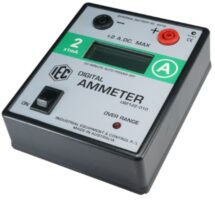
The IEC Digital Ammeter +/- 2A DC measures from 0.001A to 1.999A and includes classroom-use features such as a low-battery alert, auto shut-off and overload protection.
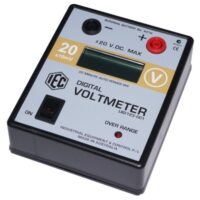
The IEC Digital Voltmeter +/- 0-20V DC measures 0.00 to 19.99V DC with 10mV resolution and 10MΩ input impedance, with low-battery alert, auto power-off and overvoltage protection.
Buying recommendation:
For repeated junior and middle-years circuit work, prioritise enough meters for student groups rather than relying on one demonstration meter. For senior physics or specialised activities, check the exact current or voltage range required before ordering.
2. IEC laboratory benchtop power supplies
Power supplies are essential for controlled circuit, electronics and physics work. For schools, the right power supply depends on the experiment type, required voltage and current, supervision level and whether the output needs to suit AC, DC or both.
Wiltronics lists IEC Laboratory Benchtop Power Supplies as products developed for the education market over many years.
Relevant Wiltronics links:
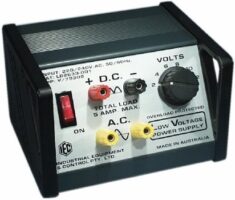
- IEC Laboratory Benchtop Power Supplies
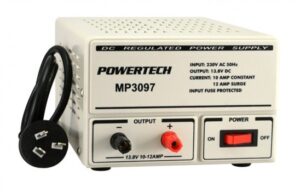
- Bench Power Supplies
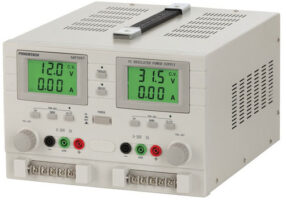
- Laboratory Benchtop Power Supplies
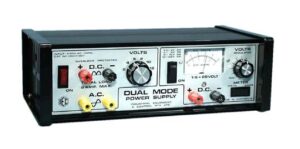
- IEC Laboratory Power Supply LB2643-001
The IEC Laboratory Power Supply LB2643-001 combines AC/DC switched output with smooth regulated DC output, and Wiltronics describes it as suitable for general lab work and electronic studies, with automatic overload protection.
Buying recommendation:
Buy power supplies around the practicals your school actually runs. Junior circuit work may need simple, repeatable low-voltage setups. Senior physics and electronics may need more flexible bench supplies with suitable output options and protection features.
3. IEC spare parts
Spare parts are one of the most valuable IEC purchasing categories for schools. Many science departments already have usable equipment that is missing small components rather than needing full replacement.
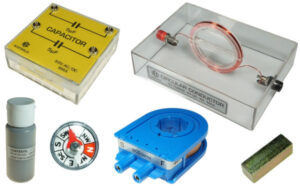
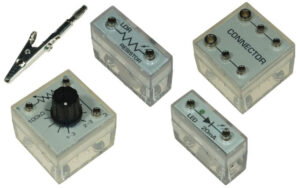
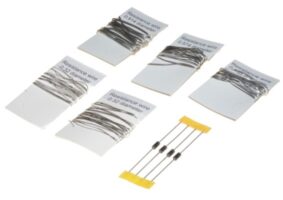
Wiltronics’ IEC Spare Parts category includes replacement spark paper, leads, bulbs, sockets, housings and other parts for repairing physics apparatus, updating older equipment and assembling experiments.
Relevant Wiltronics links:
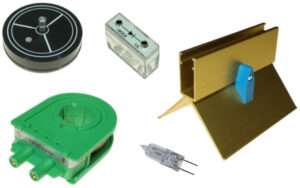
- IEC Spare Parts
- IEC Electricity Kit Spare Parts
- IEC Electronics Kit Spare Parts
- IEC Meter Ammeter Repair Kit Shunts & Diodes
Buying recommendation:
Before replacing a full kit or apparatus set, audit what is actually missing. If the main apparatus is still safe and suitable, replacing leads, lamps, sockets, housings or kit parts may be the better use of budget.
4. IEC electricity kit spare parts
Electricity kits are useful for hands-on circuit, magnetism and current investigations, but they rely on small components staying complete and organised.
Wiltronics lists IEC Electricity Kit Spare Parts for expanding an electricity kit or replacing lost components, including items such as coils, connector blocks, copper wire, fuse wire, iron cores, lamp holders, MES lamps, magnetism demonstration coils, multimeters, plotting compasses and potentiometers.
Relevant Wiltronics link:
Buying recommendation:
Keep a small stock of commonly lost or consumable electricity kit parts before peak teaching periods. This helps avoid cancelling or simplifying practical lessons because one or two low-cost parts are missing.
5. IEC spectrum tubes and optics-related parts
Spectrum tubes help students observe emission spectra from different gases. They can support lessons in light, atomic structure, energy transitions and spectroscopy.
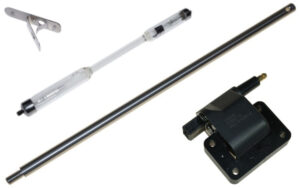
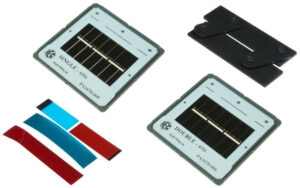
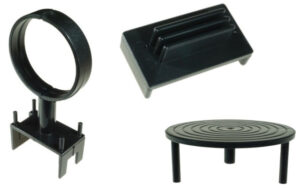
Wiltronics lists IEC Spectrum Tubes and Parts as tools for demonstrating emission spectra in physics and chemistry education, with compatibility noted for IEC spectrum tube power supply and tube holder equipment.
Relevant Wiltronics links:
Buying recommendation:
Treat spectrum and optics equipment as targeted senior science or demonstration apparatus. These items are usually better purchased around specific units or assessment tasks rather than as general-purpose class sets.
How to choose IEC equipment for your school
Start with the practical activity
The best equipment choice starts with the lesson, not the catalogue. A Year 8 electricity lesson, Year 10 investigation and senior physics practical may all involve circuits, but the equipment needs can be very different.
Ask:
- What should students observe, build or measure?
- Is the activity for demonstration, group work or individual investigation?
- How many groups need equipment at the same time?
- What current or voltage range is required?
- Does the equipment need to be AC, DC or both?
- Are spare parts available?
- Can the lab technician prepare and reset it efficiently?
Buy class sets for repeated student investigations
Class sets make sense when many students need to complete the same activity at the same time. This is common for electricity, circuit measurement and basic physics investigations.
Class sets are usually worth considering for:
- ammeters
- voltmeters
- leads
- lamp holders
- bulbs
- basic circuit components
- electricity kit parts
- low-voltage classroom activities
Buy demonstration apparatus for specialised senior topics
Some equipment is better suited to teacher demonstration or small-group senior practicals. This may include apparatus for free fall, spectra, optics, diffraction, induction, motion and other specialised physics topics.
Demonstration equipment may not need to be purchased in large quantities, but it should be reliable, visible, easy to prepare and suitable for the intended syllabus activity.
Involve the lab technician before finalising the order
Lab technicians and science assistants often know which equipment fails, which parts go missing and which kits are difficult to prepare. Their input can prevent poor purchasing decisions.
Before ordering, ask:
- Which kits are incomplete?
- Which apparatus is regularly requested?
- Which parts are most often missing?
- Which items are difficult to store or reset?
- Which equipment is no longer safe or reliable?
- Which spares would prevent lesson disruption?
Repair or replace?
Repair is often the better first option when the main apparatus is still safe, functional and relevant. Replacement is usually better when the equipment is unsafe, unreliable, obsolete or no longer suited to the curriculum.
| Choose repair when… | Choose replacement when… |
|---|---|
| Only small parts are missing | Electrical safety is uncertain |
| Spare parts are available | The unit is repeatedly unreliable |
| The apparatus still suits the lesson | Replacement parts are unavailable |
| Repair cost is reasonable | The equipment no longer fits the curriculum |
| The item can be safely checked before reuse | New equipment would improve safety or clarity |
For mains-powered, higher-voltage or damaged electrical equipment, follow your school’s safety procedures and use appropriately qualified personnel for inspection or repair.
Curriculum relevance
IEC science equipment can support practical learning across Australian school science programs, especially where students investigate physical sciences concepts through observation, measurement, testing and data analysis.
Curriculum-relevant areas include:
- electrical circuits
- current, voltage and resistance
- energy transfer
- forces and motion
- gravity and acceleration
- magnetism and induction
- light, spectra and wave behaviour
- scientific inquiry
- experimental design
- measurement accuracy
- data interpretation
- STEM problem-solving
This content is especially relevant to junior secondary science, senior physics, STEM enrichment, Design and Technologies projects, electronics activities and laboratory-based practical investigations.
For precise curriculum mapping, check the current ACARA or relevant state/territory syllabus documentation for the intended year level and subject. Do not claim exact curriculum alignment unless the activity, year level and syllabus outcome have been specifically mapped.
FAQ
What does IEC mean in school science equipment?
In this context, IEC refers to Industrial Equipment & Control, a name associated with science and physics apparatus used in education settings. It should not be confused with the International Electrotechnical Commission, which is a global standards organisation.
What is the difference between IEC equipment and general science equipment?
IEC equipment refers to a specific range or brand-associated set of apparatus and spare parts commonly used in school science and physics labs. General science equipment is broader and may include products from many brands across biology, chemistry, physics, laboratory safety, microscopes, datalogging and other categories.
What IEC equipment should a school buy first?
For general science and physics use, start with the equipment that supports repeated practical work: ammeters, voltmeters, leads, circuit components, power supplies and commonly needed spare parts. For senior physics, add specialised apparatus for motion, optics, spectra, induction and other syllabus-specific investigations.
How many ammeters and voltmeters does a class need?
It depends on class size and group structure. A common approach is to buy enough meters for each student group, plus spare units for breakage, battery issues or parallel classes. For demonstration-only activities, one teacher setup may be enough.
Should schools buy IEC spare parts or complete replacement kits?
Buy spare parts when the core apparatus is still safe, usable and curriculum-relevant. Replace the full kit or apparatus when it is unsafe, unreliable, incomplete beyond practical repair or no longer suited to the activities being taught.
Are IEC ammeters and voltmeters suitable for classroom use?
Wiltronics describes IEC digital ammeters and voltmeters as classroom-ready or classroom instruments, with features such as battery alerts, auto shut-off and protection features on selected models. Schools should still check the exact range and specification before purchase.
Where can Australian schools buy IEC science equipment?
Australian schools can browse IEC science equipment, IEC spare parts, ammeters, voltmeters, power supplies, electricity kit parts and physics apparatus through Wiltronics.
© Electrotech Brands Pty Ltd 2026
Write a Comment
You must be logged in to post a comment.